Alright, let’s cut to the chase—if you’re here because you’ve ever stared at a tiny motor or a big transformer and wondered how all those neat, tight wires get wrapped around their cores, you’re in the right spot. I’ve been selling winding machines for, let’s be real, way too many years now (don’t ask how many—I still call the old ones “vintage” even though half my crew has never touched a manual machine), so let’s break this down like I’m talking to a buddy who needs to buy their first one, not a engineering textbook. Winding Machine
First off, what even is a coil winding machine? At its most basic, it’s a machine that wraps conductive wire (usually copper, sometimes aluminum, depends on the job) around a core or a bobbin. But here’s the thing—everyone thinks it’s just “winding wire,” and yeah, that’s the core job (pun totally intended), but it’s way more than that. If you’ve ever tried winding a coil by hand? You know it’s a headache. The wire kinks, you get uneven tension, you mess up the count, and half the time it’s lopsided enough that it doesn’t work right. A good winding machine fixes all that. It’s not just a tool—it’s what makes 99% of the electronics, motors, transformers, even speakers you use every day actually function.
Let me paint a quick picture. Last week, I talked to a guy who runs a small speaker shop—he was winding his own speaker coils by hand, and he was spending 2 hours per coil. With a basic semi-automatic machine from us? He cut that time to 15 minutes, and his sound quality got better because the coils were uniform. That’s the real magic here. These machines don’t just wind wire—they make parts work better, faster, and cheaper.
Now, let’s not overcomplicate the types, because no one cares about the super technical model numbers unless you’re an engineer. Mostly, you’ve got two main camps: manual and automatic. Manuals are for tiny jobs, small batches, or folks who just starting out—like someone winding coils for a custom Arduino project. They’re cheap, simple, but you have to count turns by hand, adjust tension with your eyes, and it’s easy to mess up if you’re tired. Then there’s semi-automatic, which is the workhorse for most small to medium manufacturers. They do most of the heavy lifting—they spin the core, feed the wire at steady tension, and count turns for you. All you have to do is load the bobbin or core and trim the wire when it’s done. Way less work, way more consistent results.
Then there’s fully automatic, which is for big factories cranking out thousands of coils a day. These bad boys can load parts, wind multiple coils at once, even solder the ends on—you just set the program, load the wire spools, and walk away. We sell a ton of these to automotive parts makers; they need 10,000 starter motor coils a week, and these machines do it without breaking a sweat.
Wait, but what makes a good winding machine vs. a cheap junk one? Let’s be honest, there are a lot of cheap no-name machines out there online. I’ve seen guys buy them on Amazon or Alibaba, and they end up calling me a week later because it’s winding wire with uneven tension, it skips turns, or it breaks wire every time they use it. The key specs? Tension control is huge. If your wire’s too loose, it’ll slide around; too tight, it snaps. A decent machine lets you adjust that for different wire gauges—from super thin 30-gauge wire for tiny sensors to thick 10-gauge wire for big power transformers. Then there’s the turn counter—digital is non-negotiable these days. Manual counters are fine for small jobs, but if you need 500 turns exactly, you don’t want to count each one. Also, compatibility: does it work with your bobbins or cores? Some machines only do round cores, some do square or even irregular shapes. Oh, and wire feed—if it tangles every time you wind, it’s useless. A good wire guide will prevent that.
Let’s talk about where these things get used, because you probably interact with their products every single day. Think about the motors in your fridge, your washing machine, your electric car. The coils in those motors? Wound on winding machines. Transformers on power lines? Same thing. Speakers, wireless chargers, even the ignition coils in your lawnmower. I once sold a machine to a company that makes coils for MRI machines—those have to be perfect, no mistakes, because a bad coil could mess up the whole scan. That’s the thing about these machines—they’re not just for random parts, they’re critical for stuff that keeps our world running.
Now, why would a small business or hobbyist care? A lot of people think winding machines are only for big factories, but no. If you’re a custom electronics maker, a repair shop that rewinds old transformers, or even a hobbyist building custom speakers, a machine will save you so much time and hassle. I know a guy who restores old tube amps—he used to wind output transformers by hand, and each one would take him a full day and have a 20% failure rate. Now he has a basic semi-auto machine, and he can do three a day with a 1% failure rate. That’s the difference between making a little side money and making a full-time living.
Wait, let’s be real— I’m a supplier, so I’m not gonna pretend this is all sunshine. There’s a cost. A good semi-automatic machine isn’t cheap, and automatic ones are a big investment. But here’s the math: if you’re spending 10 hours a week winding coils by hand, that’s 10 hours you could be doing other, more profitable things. A $5,000 machine that cuts your time to 1 hour a week pays for itself in a month. That’s a no-brainer. The cheap ones might cost $500, but they’ll break in six months, and you’ll waste way more time fixing them than you would have with a decent one.
I also get a lot of questions about customization. Can a winding machine wind weird shapes? Can it handle different wire types? Yes, but not every machine. For example, if you need to wind a flat coil for a wireless charging pad, you need a machine that can adjust the wire’s path to be flat, not just round. If you’re working with litz wire (that thin, multi-strand wire for high-frequency stuff), you need a machine that can handle that without tangling. That’s why it’s important to talk to someone who knows what they’re doing, not just buy the first machine you see online.
Let me share a little horror story from a customer last year. He bought a super cheap Chinese machine off a third-party site, no support, no instructions. He was winding coils for electric scooters, and the machine kept snapping wire. He tried adjusting the tension, but the machine didn’t have a proper tension control—just a flimsy knob. By the time he contacted me, he’d wasted three weeks, thousands of feet of wire, and missed a big delivery. We ended up selling him a used semi-automatic machine at a discount, and his turnaround time went from 3 days per batch to 4 hours. Moral of the story: you get what you pay for, and support matters. If something breaks, you need someone to call, not a dead inbox.
Now, let’s wrap this up. A coil winding machine isn’t just another piece of industrial equipment. It’s the reason so many of the things you rely on every day work as well as they do. Whether you’re a tiny hobbyist making custom speakers, a small manufacturer building electronic parts, or a big factory cranking out automotive components, there’s a winding machine that fits your needs.

If you’re tired of winding coils by hand, dealing with inconsistent results, or wasting time and money on cheap machines that break fast, let’s chat. I’ve been in this game long enough to know that one size doesn’t fit all— I can help you figure out what kind of machine you actually need, no sales pitch, no pressure. Just real advice from a guy who’s sold these things for years and seen all the mistakes people make. Don’t waste another day struggling with hand-wound coils that never turn out right—reach out, and we’ll find the right solution for you.
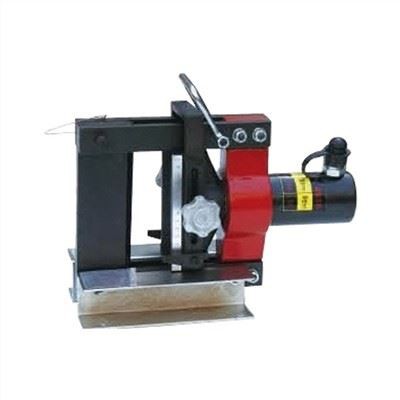
Busbar Bending Machine REFERENCES
- "Industrial Coil Winding: Principles and Applications", 2nd Edition, Industrial Press Inc., 2021
- "Coil Winding Technology for Modern Electronics", Electronics Manufacturing and Technology Association, 2022
- "Choosing the Right Winding Machine for Small to Medium Batch Production", SME Manufacturing Insights, 2023
Jinan Deshang CNC Equipment Co., Ltd.
Jinan Deshang CNC Equipment Co., Ltd. is one of the leading winding machine manufacturers and suppliers in China. We warmly welcome you to buy high-grade winding machine for sale here from our factory. All OEM products are with high quality and competitive price. Contact us for more details.
Address: Room 409, Building 2, No. 59 Gongye South Road, High-tech Zone, Jinan City, Shandong Province
E-mail: lisa@busbarchina.com
WebSite: https://www.cncbusbar.com/
