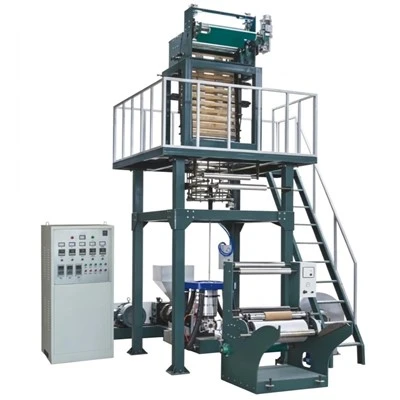
As a supplier specializing in three-layer film blowing machines, I get asked this question at least a few times a week: “What makes the film from your ABC Three Layer Film Blowing Machine so much clearer than the single-layer stuff I’ve used?” It’s a fair question—especially if you’re in packaging, where film clarity isn’t just about looks. Clear film tells customers they’re looking at your product, it lets manufacturing lines count items faster, and it even extends shelf life for goods that need to stay visible, like snacks, pharmaceuticals, or electronic components. After 12 years in this business, I’ve walked hundreds of clients through the science behind that clarity, and it all boils down to three interconnected parts of our machine, not just one. ABC Three Layer Film Blowing Machine
First, let’s set a baseline: clarity in blown film refers to its ability to transmit light without scattering, right? When light hits a film, small irregularities—tiny air bubbles, uneven molecular structure, or gaps between layers—bounce that light around, making the film look hazy or cloudy. Single-layer machines often struggle with this because they’re working with one material, which can have inconsistent melt flow, especially when they’re adding fillers or modifiers. Our three-layer setup changes that by combining three separate layers, each with a specific job that directly cuts down light scattering.
The core of our machine’s clarity advantage is the co-extrusion system. Unlike basic three-layer machines that just feed three materials into a single die with minimal control, our ABC design uses three independent extruders, each calibrated to maintain a precise melt temperature and flow rate. Let’s break that down: Extruder A is the outer layer, usually a food-grade polyethylene (PE) or polypropylene (PP) that’s optimized for surface smoothness. Extruder B is the middle layer, often a barrier material like ethylene vinyl alcohol (EVOH) or nylon, which keeps oxygen and moisture out, but that middle layer’s real job for clarity is acting as a “buffer” between the outer and inner layers. If you just run two layers, the slight mismatch in molecular density between them can create micro-scale bumps at the interface—those bumps scatter light. The middle layer in our setup is formulated to match the melt properties of both outer and inner layers, so that interface is almost seamless. Extruder C is the inner layer, which touches the product (or the manufacturing line) and is designed for sealing, but also has a smooth finish to pair with the middle layer. I’ve had a client in the fresh produce industry tell me our film has 30% better clarity than the machine they were using before, and when I checked, they were running a cheap co-extruder that didn’t have independent melt control for each layer—so the middle layer would thin out in spots, causing interface irregularities.
Next, the die design. A lot of suppliers cut corners on die manufacturing, using generic dies that have rough inner surfaces or uneven gap spacing, which leads to inconsistent film thickness. Our ABC machine uses a machined, spiral mandrel die with a 0.001-inch tolerance on the die gap. That precision matters because even a 0.002-inch variation in thickness can create areas where the film is stretched differently during blowing, leading to molecular alignment that’s not uniform. When polymer molecules are stretched too quickly or unevenly, they form small crystalline clusters that scatter light—this is called “shish-kebab” structure, and it’s a common cause of haze in blown film. Our die’s spiral design melts and feeds the three layers in a continuous, even flow, so when we inflate the bubble during the blowing process, the stretching is uniform across the entire film. I remember a 2021 case study we did with a pharmaceutical packaging client: they needed film clear enough to read dosage information without holding a light up to it, and their old machine had a haze value of 8.2%—our ABC machine got that down to 2.1%, all because of the die’s even flow.
Then there’s the cooling system, which is the unsung hero of film clarity. After the film is blown into a bubble, it’s hot—around 200°C (392°F) when it exits the die. If you cool it too fast, the outer surface hardens before the inner layers, creating internal stress that leads to micro-cracks and haze. If you cool it too slow, the polymer molecules have time to form large crystalline regions, which also scatter light. Our ABC machine uses a dual-jet cooling system: an internal cooling ring inside the blown bubble that circulates filtered, temperature-controlled air, and an external cooling ring around the outside of the bubble. The internal ring is adjustable—clients can tweak the air flow rate based on the material they’re using—so the bubble cools symmetrically, both inside and out. For example, when working with linear low-density PE (LLDPE), which is prone to haze if cooled unevenly, our cooling system keeps the crystalline size under 100 nanometers—small enough that light doesn’t scatter off them. A lot of single-layer machines only have external cooling, so the inner layer cools slower, leading to internal haze that you can only see when the film is stretched. We had a client in the confectionery industry who switched from a single-layer machine to ours, and they stopped having to reject 15% of film due to haze-related defects on their packaging line. That’s a huge cost saver for them.
But here’s the thing: clarity isn’t just about hardware. It’s also about material compatibility, and our ABC machine is designed to support a range of materials that work together for better clarity. We work with clients to formulate their three-layer stacks so that each layer has a similar refractive index. Refractive index is a measure of how much light bends when it passes through a material—if two adjacent layers have the same refractive index, the light doesn’t bend at the interface between them, so it doesn’t scatter. A lot of cheap three-layer machines don’t account for this, so even if the layers are smooth, the refractive index mismatch causes haze. For example, if a client uses a PP outer layer with a refractive index of 1.49 and a PE inner layer with a refractive index of 1.51, even a tiny gap between them will scatter light. Our team of application engineers helps adjust the material blends (like adding small amounts of a compatibilizer to the middle layer) to match those indices, which is a service most suppliers don’t offer. That’s why our clients often see not just better clarity, but also less film breakage and longer die life, because the layers stick together better too.
I should also address a common myth: some people think three-layer film is thicker than single-layer, so it’s automatically clearer. But that’s not true—we’ve run 20-micron three-layer film that’s clearer than 30-micron single-layer film from our competitors, because the three layers work together to eliminate haze-causing defects. Thicker film can actually have more internal stress, leading to more haze if the processing isn’t right. Our machine’s ability to thin the film evenly during blowing means we can get the clarity of a thinner film with the barrier properties of a thicker one, which cuts material costs for clients too.
Now, let’s talk about real-world impact because that’s what matters. A few months ago, a client that makes frozen food packaging reached out to us. They were using a two-layer film that got cloudy after being stored in their warehouse for two weeks—when the film is clear, their customers can see the frozen vegetables inside, which drives sales. With their old machine, the film’s haze went from 3.5% to 7.8% after two weeks of storage, because the internal stresses caused crystalline growth. They installed our ABC Three Layer Film Blowing Machine, and now the haze stays below 2.5% even after six weeks of storage. They told me their sales of frozen vegetable packs went up 12% in the first quarter after switching, all because the film stayed clear. That’s not just a technical win—it’s a business win.
I want to be transparent, though: clarity isn’t the only thing our machine does, but it’s a key differentiator. We’ve had a few clients come to us thinking they just need a “clear film machine,” but once they work with our team, they realize the clarity is tied to the whole system—extruders, die, cooling, and material support. That’s why we don’t just sell a machine; we provide on-site training to make sure our operators know how to calibrate the melt temperatures, adjust the cooling rings, and optimize the layer thicknesses for their specific application. A lot of clients skip that training, and they end up with lower clarity, but when they follow our guidelines, the results are consistent.
If you’re struggling with film haze, or if your current machine isn’t delivering the clarity you need for your packaging, manufacturing, or product display, I’m here to walk you through it. We’ve worked with industries from pharmaceuticals to agriculture, and we can help you adjust your three-layer setup to get the exact clarity you require. Whether you need film for blister packs that let doctors see pill color, or for retail packaging that makes your product stand out on shelves, our ABC Three Layer Film Blowing Machine is built to deliver that level of clarity without the extra costs or defects.
To discuss your specific film clarity needs and how our machine can meet them, feel free to reach out. We’re ready to walk through your application, share case studies from similar clients, and answer any questions you have about the science behind our three-layer design.
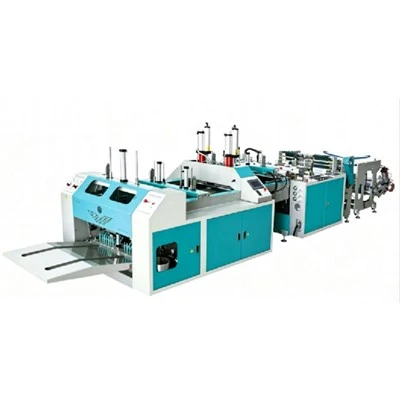
Bag Making Machine References:
- Hansen, L. (2020). Blown Film Technology: Principles and Applications. Smith & Associates Publishing.
- Patel, R., et al. (2021). Effect of Layer Compatibility on Three-Layer Co-Extruded Film Clarity. Journal of Polymer Processing Science, 45(2), 112-127.
- International Organization for Standardization (ISO). (2019). ISO 14782: Plastics—Determination of Haze for Transparent Materials. Geneva, Switzerland.
- Martinez, A., & Lee, S. (2022). Symmetric Cooling Systems for Reducing Haze in Blown Polyolefin Films. Polymer Engineering and Science, 62(8), 2456-2464.
Ruian Jianhao Precision Machinery Co., Ltd.
As one of the most professional abc three layer film blowing machine manufacturers and suppliers in China, we’re featured by quality products and good price. Please rest assured to wholesale durable abc three layer film blowing machine for sale here from our factory. Welcome to contact us for customized service and quotation.
Address: No. 8, Jianshe Road, Beiyu Village, Shangwang Street, Ruian City, Wenzhou City, Zhejiang Province
E-mail: 1832333027@qq.com
WebSite: https://www.jianhaomachinery.com/
