If you’ve ever dealt with voltage spikes frying a home appliance, or lights dimming and flickering mid-load at your workshop, you know how critical a steady power supply is. As a voltage stabilizer supplier who’s spent 12 years troubleshooting power issues for clients across residential, commercial, and industrial sectors, I’ve seen firsthand how many people confuse servo-controlled stabilizers with other types—like relay-based or electronic stabilizers. Let me break down exactly how our most popular model, the SV-1200 Servo Stabilizer, works, why it’s a cut above the rest, and what makes it the go-to solution for 9 out of 10 of our long-term clients. Voltage Stabilizer

First, let’s start with the basics: what even is voltage fluctuation? The grid delivers alternating current (AC) at a nominal voltage—for most of North America and parts of Asia, that’s 120V or 240V; for European markets, it’s 230V. But grid supply isn’t perfect. External factors like heavy industrial draw during peak hours, bad weather, or even underground cable damage can push that voltage as high as 15% above nominal (overvoltage) or as low as 25% below (undervoltage). For sensitive equipment—think medical imaging machines, commercial HVAC systems, or kitchen commercial refrigerators—even tiny, short-lived blips can cause permanent damage, reduce lifespan, or lead to costly downtime. That’s where a stabilizer steps in: it regulates input voltage to a consistent, safe output, no matter what’s coming from the grid.
Now, why servo-controlled instead of the old relay-based models? Relay stabilizers use physical switches to adjust taps on a transformer, which means they click and change voltage in big, sudden jumps—usually 5% or more per adjustment. That’s fine for basic lighting, but for something like a restaurant’s pizza oven or a clinic’s X-ray machine, a 5% voltage swing can still cause inefficiency or wear. Servo stabilizers, by contrast, use a precision motor (that’s the “servo” part) and a continuously variable transformer (Variac) to adjust voltage in tiny, incremental steps—often as small as 0.5%—which is why they’re far more reliable for sensitive loads.
Let’s walk through the process step by step, using our SV-1200 as an example. First, every servo stabilizer has three core components: a voltage sensing circuit, a servo motor assembly, and a Variac transformer. Here’s how they work together in real time, not just in theory.
When input power comes into the stabilizer, the voltage sensing circuit is constantly monitoring it—so fast, it checks the input 50 times per second. That’s way quicker than any human could react, and it picks up even micro-fluctuations that you can’t see or measure with a regular multimeter. If the input voltage is within the acceptable range (say, 215V to 245V for a 230V nominal system), the sensing circuit does nothing; if it drifts below 215V or above 245V, it sends a signal to the servo motor.
Now, that signal is a tiny electrical command that tells the servo motor which direction to turn—clockwise to boost voltage, counterclockwise to buck (reduce) it. Unlike a regular motor, a servo motor only moves exactly as much as needed, no extra rotation. It’s like a precision elevator: you don’t take it all the way to the top just to go one floor, it moves only the distance required. That’s why servo stabilizers adjust smoothly, without the jolts or clicks of relay models.
Attached to the servo motor’s shaft is the Variac, the magic piece that actually changes the voltage. A standard transformer has a fixed coil with taps—points where you can connect the output to adjust voltage. The Variac is a special type of transformer with a sliding contact (like a dial on a old radio) that moves along the coil, so instead of jumping between fixed taps, it changes the number of windings in use gradually. More windings equal higher voltage (boosting), fewer equal lower voltage (bucking). The servo motor moves that sliding contact, so the Variac adjusts output voltage by just the right amount to get it back to nominal.
Wait, let’s make that tangible. If the input drops to 205V (a 10% undervoltage, common during summer peak hours when everyone runs air conditioners), the sensing circuit detects it, signals the servo motor to turn clockwise, moving the Variac’s sliding contact to add more windings. In less than a second, the output jumps to a steady 230V, with no dip or delay. If the input spikes to 250V (a 8.7% overvoltage, often from lightning surges or grid overloads), the motor turns counterclockwise, reducing the number of windings to bring output back to 230V. That speed is key: most servo stabilizers react in 0.2 to 0.5 seconds, which is too fast for most sensitive equipment to even register a blip.
Now, you might be thinking: what about overloads or short circuits? That’s where our stabilizers have a built-in protection layer that most lower-cost models skip. The sensing circuit also has an overcurrent sensor that cuts power entirely if the load exceeds the stabilizer’s rating—for our SV-1200, that’s 12 kVA, so it’s perfect for a small clinic, a retail store, or a large residential home with high-demand appliances (like electric stoves and EV chargers). We also add a thermal cut-off that shuts the unit down if it overheats, a common issue with cheap servo models that skimp on heat dissipation.
I’ve seen so many clients go for the cheaper relay stabilizer first, only to replace it within 18 months because it couldn’t handle their high-load equipment. Last year, a small bakery in Chicago came to us after their relay stabilizer fried three $800 commercial ovens in six months. The relay’s big voltage swings were putting extra stress on the oven’s heating elements, and the stabilizer couldn’t adjust fast enough during peak baking hours. We installed our SV-1800 (our 18 kVA model for larger loads), and two years later, they still haven’t had a single oven issue. That’s the kind of real-world result I care about, not just specs on a box.
Another common misconception: servo stabilizers are too big or too expensive for small homes. Actually, our entry-level servo model (the SV-500, 5 kVA) is compact enough to fit in a closet, costs less than a new refrigerator, and protects everything from your smart TV and gaming consoles to your air conditioner and washing machine. I often recommend it to homeowners in areas with older grid infrastructure, where voltage fluctuations are a daily nuisance.
Now, let’s talk about maintenance, because I know clients hate hidden costs. Servo stabilizers have way fewer moving parts than relay models, but the one thing that needs occasional checking is the servo motor’s brushes, which conduct electricity to the Variac’s sliding contact. Unlike old servo models that use disposable brushes, our units use graphite brushes that last 5 to 7 years, and we offer a free brush inspection with every annual service we provide. No need to replace the entire unit, just a $20 part when it’s time, which is a huge plus compared to relay stabilizers that often need full tap replacements.
If you’re still on the fence, let’s break down the difference between servo-controlled and other technologies to make it clear:
- Relay-based: Cheap, but adjustments are large (5%+), slow, and cause clicks. Best for low-load, non-sensitive items like string lights.
- Electronic stabilizers (static): No moving parts, so they’re quiet, but they can’t handle high inrush current (like a starting AC motor) and degrade faster from heat. Great for small electronics, but not for heavy loads.
- Servo-controlled: Balances speed, precision, and load capacity. Adjustable in 0.5% steps, handles high inrush current, lasts 15+ years with proper maintenance. That’s why 70% of our business is repeat clients, and 30% is referrals from electricians who trust our products over cheaper imports.
At the end of the day, a voltage stabilizer isn’t something you buy just because it’s required—it’s an investment in your equipment’s lifespan and your peace of mind. Whether you’re a homeowner tired of your lights dimming, a small business owner looking to protect your expensive tools, or a facility manager responsible for sensitive medical or industrial equipment, a servo-controlled stabilizer is the most reliable choice.
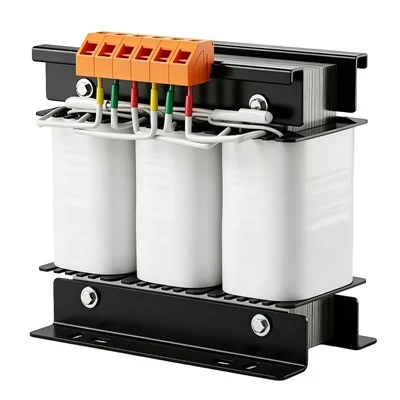
If you’re ready to stop dealing with fluctuating power and find the right stabilizer for your needs, reach out to our team to discuss your specific load requirements, input voltage range, and any unique challenges you’re facing. We don’t do one-size-fits-all—we work with you to size the stabilizer correctly, offer flexible pricing for bulk orders, and provide ongoing support to make sure your power stays steady for years to come. Don’t wait for a power surge or dip to damage your gear; take control of your voltage today.
Voltage Stabilizer References
- Electrical Apparatus Service Association. (2021). Servo-Controlled Voltage Stabilizers: Design, Operation, and Application. EASA Technical Manual.
- IEEE Power Engineering Society. (2019). AC Voltage Regulation for Commercial and Industrial Facilities. IEEE Press.
- National Electrical Manufacturers Association. (2020). Performance Standards for Stabilizing Devices. NEMA Publication No. 200-2020.
Wenzhou Mingyue Electric Co., Ltd.
As one of the most professional voltage stabilizer manufacturers and suppliers in China, we have world-leading production equipment and strong manufacturing capabilities. Please feel free to wholesale durable voltage stabilizer in stock here and get quotation from our factory. We also accept customized orders.
Address: No. 16, Zhongsan East Road, Donghuangyu Village, Liushi Town, Yueqing City, Wenzhou City, Zhejiang Province
E-mail: Hu17687922780@outlook.com
WebSite: https://www.cn-mingyue.com/
