If you’ve ever relied on hydraulic machinery—whether it’s a construction excavator lifting steel beams, a warehouse forklift stacking pallets, or a manufacturing press stamping car parts—you know how disruptive a sudden breakdown can be. As a hydraulic parts supplier, I get weekly calls from customers panicking because their equipment went down on a job site, often because they missed subtle, early signs of a failing part. The worst part? Most of these issues are preventable if you catch them before they escalate into costly downtime or, worse, safety hazards. Over 12 years in this industry, I’ve helped hundreds of operators identify red flags in hoses, seals, pumps, and valves—so today, I’m breaking down the concrete, science-backed signs of a failing hydraulic part, so you can spot problems before they spiral. Hydraulic Parts

Let’s start with the basics: hydraulic systems work by transmitting force through pressurized fluid, so any part that disrupts pressure, flow, or fluid integrity will cause immediate performance issues. But small, gradual changes are often easy to dismiss as “normal wear” or “operator error.” Let’s walk through the most common signs, ordered by how early you can spot them.
First up: uncharacteristic noise from the system. If your hydraulic pump starts making a high-pitched whine, a grinding noise, or even a rattle when you engage the machinery, that’s not normal. I’ve seen this as one of the earliest red flags of pump failure, and it’s usually caused by air entering the hydraulic lines. Wait—air in a hydraulic system? That’s a thing. When seals start to harden or crack (a common issue with rubber components as they age, since rubber degrades from heat, fluid contamination, and UV exposure), small gaps form that let air seep in. Unlike hydraulic fluid, air is compressible, so when you activate the system, those air bubbles get squeezed, creating cavitation. Cavitation is what causes that whine: collapsing air bubbles implode on the pump’s internal components, eroding metal over time. I had a customer last year who ignored a faint whine from his excavator’s main pump for two weeks; by the time he replaced it, cavitation had damaged the impellers so badly he had to pay twice for a new pump plus cover the cost of the digger being idle on a $10,000 job. A quick check: if the noise only happens when the system is under load (like lifting a heavy load instead of idling), that’s almost certainly air entering through failing seals, not just a loose part.
Next: inconsistent or slow performance. Think about it: when you press the forklift’s lift button, the forks should rise at a steady speed. If they jerk up, slow down halfway, or can’t reach full height even when the fluid level is full, that’s a sign of a failing part. Most often, this points to a faulty hydraulic valve or a worn pump. Valves control the direction and flow of fluid to different parts of the system, and their internal spools (the metal pieces that move to open and close passages) can wear down from constant use. When the spool’s clearance becomes too large, fluid leaks past it instead of flowing where it’s supposed to—this is called internal leakage, and it reduces system pressure. For pumps, wear on the pistons, gears, or vanes inside means they can’t generate the required pressure, so the system can’t perform tasks that need high force, like lifting heavy materials or pressing metal. I recommend testing pressure regularly with a hydraulic pressure gauge: if your system’s pressure is 10% or more below the manufacturer’s specification, that’s a clear sign a part (pump, valve, or seal) is failing. Don’t just top off the fluid—run the test; it’s the only way to confirm the issue isn’t internal.
Fluid-related issues are another big one, and they’re often the easiest to spot if you’re monitoring your system. Healthy hydraulic fluid should be amber or light brown, clear, and have no unusual smell. If it’s dark, milky, or has a burnt odor, that’s a problem. Dark fluid usually means it’s oxidized—heat from the system breaks down the fluid over time, and when this happens, it becomes acidic, which eats away at seals and metal components. Milky fluid is a sign of water contamination: water can enter through a faulty seal or condensation in the reservoir, and it mixes with the fluid, causing corrosion and reducing lubrication. Burnt-smelling fluid means it’s been overheated, often because a worn pump is working too hard, or the system is operating at pressure higher than it should. Another red flag: fluid that has visible particles or foam. Foam is another sign of air in the system, and particles mean contamination from worn parts (like metal shavings from a pump or valve) that are circulating through the fluid. Last year, I had a construction company that replaced their hydraulic fluid every six months but didn’t check for particles; when their crane failed, we found metal shavings from a bad valve coating that had scratched the pump’s impellers. Fluid analysis (a simple lab test) can catch this early—we offer it to all our regular customers as a free check, and it’s saved them thousands in repairs.
Leakage is the most obvious sign, but not all leaks are equal. A small, slow leak from a hose fitting might seem harmless, but it’s not. External leaks (from hoses, seals, or fittings) reduce the amount of fluid in the system, which can cause low pressure, and they also attract dirt and debris that can enter the system. More seriously, internal leaks (which you can’t see) are even more damaging: when seals or valve components wear, fluid leaks inside the system instead of outside, robbing pressure and causing the inconsistent performance we talked about earlier. Hoses are particularly prone to failure: rubber hoses can crack from age, or the reinforcement layers (usually steel) can corrode, weakening the hose until it bursts. I see this a lot with older equipment where hoses aren’t replaced on schedule—if a hose has bulges, cracks, or its outer layer is peeling, that’s a clear sign it needs to be replaced immediately. A burst hose on a job site not only causes downtime but can also create a slipping hazard if fluid spills on concrete, so it’s not just a mechanical issue—it’s a safety one.
Finally, unexplained temperature spikes. Hydraulic systems should operate between 120°F and 180°F (49°C to 82°C) when under load. If you touch a hose or a pump and it’s too hot to hold comfortably, that’s a sign something is wrong. Overheating causes fluid to degrade faster, breaks down seals, and reduces the effectiveness of the system. What causes it? A clogged filter, which restricts fluid flow, making the pump work harder and generate more heat. A worn pump, as we mentioned, also works harder, leading to heat. Or a faulty relief valve, which is supposed to release excess pressure if the system is overloaded—if it’s stuck open or closed, it can cause pressure to build up, leading to overheating. Last winter, a snow removal company brought in their front loader; the hydraulic fluid was 210°F, and we found their filter was completely clogged with ice and salt particles. The operator had skipped changing the filter in cold weather, and the restriction caused the pump to overheat—we replaced the filter and cleaned the system, and it was back to work the next day, avoiding a breakdown during a major snowstorm.
Now, let’s talk about why these signs matter more than ever right now. Post-pandemic, supply chains have been slow, so operators often stretch part lifespans longer than recommended to avoid waiting for replacements. That’s a risky call—replacing a $50 seal early is way cheaper than replacing a $5,000 pump after it’s damaged. As a supplier, we stock most common hydraulic parts (hoses, seals, pumps, valves) and can ship same-day for emergency orders, so you don’t have to sit around waiting for a part to arrive when your equipment is down.
If you’re noticing any of these signs in your machinery—whining pumps, slow performance, fluid discoloration, leaks, or overheating—don’t wait for a breakdown. We can help you diagnose the issue, recommend the right replacement part (no generic, one-size-fits-all here—we match parts to your specific equipment model), and even provide guidance on proper maintenance to keep your system running smoothly. Our team has worked with small forklift fleets and large construction companies alike, so we know how to tailor solutions to your needs.
Reach out to us to discuss your hydraulic parts needs and get the support you need to keep your equipment operational.
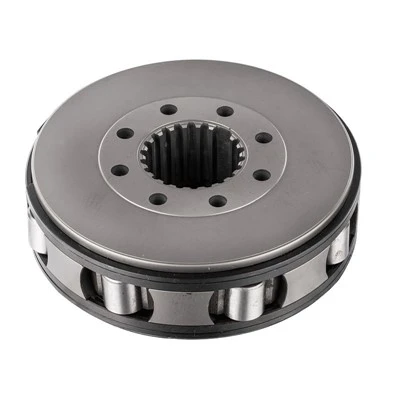
Poclain Hydraulic Motor References
- Hydraulic Institute. (2022). Guidelines for Hydraulic System Maintenance and Troubleshooting. Hydraulic Institute Press.
- Mann, D. (2021). Hydraulic Component Wear: Causes, Detection, and Prevention. Industrial Fluid Systems Magazine.
- National Institute for Occupational Safety and Health (NIOSH). (2020). Hydraulic System Safety and Failure Prevention for Heavy Equipment Operators. U.S. Department of Health and Human Services.
- Society of Manufacturing Engineers (SME). (2019). Hydraulic Pressure and Performance Specifications for Industrial Machinery. SME Press.
Ningbo Oushijie Hydraulic Transmission Co., Ltd.
Ningbo Oushijie Hydraulic Transmission Co., Ltd. is one of the most professional hydraulic parts manufacturers and suppliers in China, also supports customized service. With abundant experience, we warmly welcome you to wholesale durable hydraulic parts at competitive price from our factory.
Address: Changshi Sanxing Industrial Zone, Jiulong Lake Town, Zhenhai District, Ningbo,Zhejiang, China
E-mail: yong@nbosj.com
WebSite: https://www.nbosj.com/
