If you’ve ever worked in wastewater treatment, mining, or maybe even industrial sludge management, chances are you’ve crossed paths with flocculants—though the name nonionic polyacrylamide (NPAM) might sound like a lab-grade term until you see it work. I’m one of the folks on the supply side of this stuff, and let me tell you, I get so many questions from customers asking, “Wait, does NPAM actually move the needle on dewatering? Or is it just another chemical we’re throwing at a problem that’ll sort itself out?” Nonionic Polyacrylamide
Let’s cut to the chase first: yeah, it does. But not in the “one-size-fits-all magic wand” way some sales guys make it sound. I’ve been talking to plant managers and mine supervisors long enough to know that dewatering is the boring, make-or-break part of so many operations. If you leave wet sludge or slurry sitting around, it slows down downstream processes, eats up storage space, and costs you a fortune in disposal fees. NPAM is the quiet workhorse that fixes a lot of those headaches, but only if you get how it actually does its thing.
First, let’s get the basics straight, no stuffy textbook terms. Nonionic means the polyacrylamide molecules don’t carry a positive or negative charge—unlike anionic or cationic variants. That makes it versatile, right? A lot of other flocculants only play nice with one type of sludge, but NPAM works on neutral, slightly negative, even slightly positive slurries. Here’s how that translates to dewatering: when you mix a small amount of NPAM into the wet slurry, those long polymer chains stretch out and snag tiny, suspended particles (think clay, silt, fine ore, or even biological solids from wastewater) that would otherwise float around forever. Once snagged, those particles clump together into bigger, fluffier aggregates called flocs.
Wait, but why does that help with dewatering specifically? Dewatering is all about separating water from solids as efficiently as possible—whether you’re pressing sludge in a filter press, spinning it in a centrifuge, or just letting it drain on a belt filter. If you’ve got tiny, individual particles, they get stuck in the pores of filter media, clogging it up so water can’t pass through fast. The flocs NPAM makes are big and porous, so water can slip right out. And because the flocs are held together by those polymer chains, they don’t break apart easily when the filter press squeezes down or the centrifuge spins at high speed. That means you end up with drier cake on the other side, and way less water left in the system to deal with.
I’ve seen this play out so many times I could almost set my watch to it. Last year, a small municipal wastewater plant I work with was dealing with sludge that was hovering at 12% solids after dewatering. Their disposal company was charging them extra for every ton of wet sludge, and they were already maxed out on storage tanks. We had them test a low-dose NPAM (only 0.3% of dry sludge weight—way less than they were using with their old flocculant) and within two weeks, they were pulling 18% solids cake. That might not sound like a huge jump, but when you multiply that over 20 tons of sludge a day, that’s 6 more tons of dry, disposable cake instead of wet sludge they had to haul away. Their disposal bill dropped by almost 25% in a month. Those numbers stick with you, right?
But here’s the thing NPAM isn’t perfect. A common mistake people make is dosing too much or too little. Too little, and you don’t form big enough flocs—particles stay too small, filters clog, dewatering rate stays slow. Too much, and those polymer chains start wrapping around each other instead of around sludge particles. You get slimy, over-flocculated sludge that’s actually harder to dewater, and you’re wasting chemical money for no reason. I always tell new customers: start with a jar test. Grab a few samples of their sludge, add tiny amounts of NPAM at different doses, mix for the right time (usually 10-30 seconds—don’t overmix, that breaks flocs!), and watch what happens. If the flocs are firm, not mushy, and easy to separate from water, you’ve got your sweet spot.
Another big plus for NPAM: it’s gentle on equipment. I know some flocculants with high charge can corrode pipes or wear out filter media faster, but nonionic polymers are pretty mild. That’s a huge win for places that run expensive equipment—less downtime, fewer replacement parts, less maintenance. We had a mining customer last year who was using a cationic flocculant that was eating through their belt filter’s fabric every 2 months. Switched to NPAM, and the fabric lasted 5 months on average. The difference in maintenance costs alone covered almost half of their NPAM supply bill.
Wait, but isn’t there a time when NPAM isn’t the right call? Absolutely. If you’re dealing with super alkaline or super acidic slurries, anionic or cationic might work better, or you might need to adjust your NPAM dose. If your sludge has a lot of very fine, charged biological solids, cationic flocculants might floc faster. But for a huge range of applications—mineral processing, municipal sludge, food and beverage wastewater, even papermaking sludge—NPAM is a solid go-to, especially when you want something flexible that doesn’t need constant tweaks based on slurry pH.
Let’s talk about something I get asked a lot: “Does NPAM actually reduce my overall dewatering time?” Short answer: yes. Because you’re forming those big flocs faster, the dewatering equipment doesn’t have to work as hard. A belt filter that used to take 10 minutes per cycle might finish in 6 minutes with NPAM. A centrifuge that was throwing off wet sludge might have a higher solids recovery rate, so you’re processing more slurry in the same amount of time. For plants running 24/7, that extra capacity is gold—no need to buy new equipment, just adjust the chemical they’re already using.
I also want to mention something a lot of suppliers gloss over: how NPAM interacts with different types of dewatering equipment. Filter presses love NPAM because the firm flocs hold their shape when squeezed, so you get a drier cake and less cake sticking to the plates. Centrifuges benefit because the flocs don’t shear apart during the high-speed spin, so less solid is lost in the centrate (the water that comes out the other end) and you don’t have to treat as much centrate before discharging it. Belt filters? The porous flocs drain faster, so your belt can move faster, increasing throughput. I’ve even seen it work for lagoon dewatering—adding a low dose of NPAM to lagoon sludge speeds up natural drainage, so you can get the lagoon back online weeks faster instead of waiting for it to dry on its own.
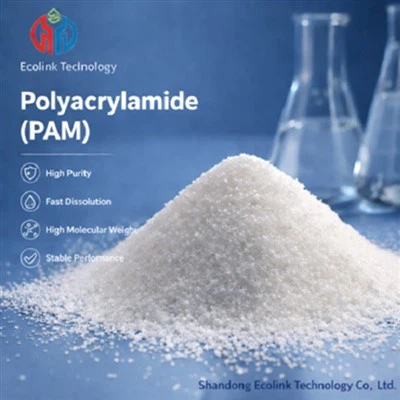
Now, let’s get real about the supply side stuff—since that’s what I do. A lot of customers worry about NPAM being hard to store or use. We’ve worked on that a lot: we supply it as easy-to-dissolve granules, not hard-to-handle powders that clump up, and we include detailed mixing instructions tailored to your specific dewatering setup. We also offer small test batches first, so you don’t have to commit to a big order to try it out. That’s non-negotiable for me—no pushing a huge, expensive product on a customer before they can see it works for their exact sludge.
I get it, there’s a lot of noise in the flocculant market. Everyone says their product is the best. But I’ve been in this long enough to see results that speak for themselves. NPAM doesn’t solve every dewatering problem, but it solves a lot of the most common ones: too much wet sludge, clogged filters, high disposal costs, slow processing times. The key is getting the right type, dosing it correctly, and matching it to your equipment and sludge.

If you’re tired of throwing money at dewatering problems that aren’t getting better, or you’re just curious to see if NPAM could work for your operation, reach out to our team. We don’t do one-size-fits-all pitches—we’ll help you run a free test on your sludge, figure out the right dose, and work with your budget to get set up. No hard sales tactics, no confusing fine print. Just real flocculant that actually works, and support to make sure you’re using it right.
Polyacrylamide References
- Edzwald, J.K. (1993). Principles of Flocculation and Flocculation Basics. Water Environment Research, 65(4), 450-456.
- Weiss, J. (2005). Polymer Flocculation in Mineral Processing: A Review. International Journal of Mineral Processing, 77(1), 1-18.
- Wang, L.K., Shammas, N.K., & Selke, W.A. (2011). Sludge Dewatering. In Advanced Physicochemical Treatment Processes (pp. 215-254). Humana Press.
- Zhang, Y., et al. (2018). Nonionic Polyacrylamide for Sludge Dewatering: Effects on Floc Structure and Dewatering Performance. Journal of Environmental Management, 217, 589-596.
Shandong Ecolink Technology Co., Ltd.
Shandong Ecolink Technology Co., Ltd. is one of the most reliable nonionic polyacrylamide manufacturers and suppliers in China. We warmly welcome you to wholesale bulk high quality nonionic polyacrylamide from our factory. If you have any enquiry about cooperation, please feel free to email us.
Address: No. 8, Xiaying Chemical Industry Park, Aobu Road, Xiaying Town, Changyi City, Weifang City, Shandong Province,China
E-mail: sale02@ecolink-environment.com
WebSite: https://www.ecolink-environment.com/
