If you’ve ever strolled through a well-manicured backyard, a public park’s rock garden, or a modern commercial landscape, chances are you’ve spotted a landscape boulder—either tucked as a focal point by a patio, grouped in a native plant bed, or lining a driveway. For years, as a landscape boulders supplier, I’ve fielded the same question from homeowners, landscape architects, and property managers: “Are these boulders actually weather-resistant?” It’s a fair question. After all, a $200 to $500 boulder is a long-term investment, and no one wants to replace it in three years because it faded, cracked, or crumbled into gravel after a season of rain, wind, or sun. Landscape Boulders
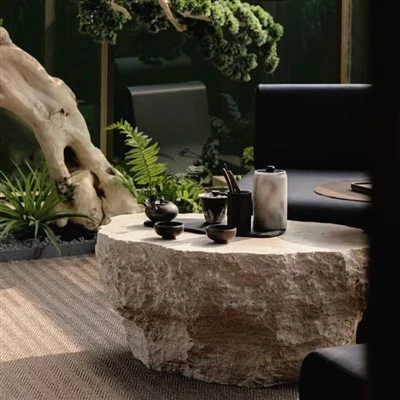
The short answer? Some landscape boulders are extremely weather-resistant, while others will show wear fast. The difference comes down to two things: the type of rock the boulder is made from, and how it was sourced and prepared before it hits your landscape. Let’s break this down, because it’s not as simple as “all rocks last forever”—but the good news is, choosing the right boulder means you’ll enjoy it for decades, even in the harshest climates.
First, let’s talk about what “weather-resistant” actually means for a landscape boulder. This isn’t about withstanding a nuclear test or a Category 5 hurricane. It’s about enduring the everyday: freeze-thaw cycles that can split rock apart, UV rays that fade color and break down mineral bonds, acid rain that dissolves soft minerals, and constant moisture from rain or snow that seeps into pores and weakens the rock’s structure. A weather-resistant boulder will hold its shape, color, and texture for 20, 50, even 100 years with minimal maintenance. A non-resistant one might develop cracks within a couple of winters, or turn dull and gray instead of keeping that rich, earthy tone you picked it for.
Now, the rock types that make the cut as weather-resistant. I’ve sourced and sold hundreds of boulders over the years, and these three are the most reliable:
Granite is the rock star here. It’s an igneous rock, formed deep underground when magma cools slowly, which gives it a tight, interlocked crystal structure. That density and lack of large pores means water can’t seep in easily, so freeze-thaw cycles rarely affect it. Granite’s color—think pink, gray, black, or even speckled multi-toned—comes from minerals like quartz, feldspar, and mica, and those minerals are incredibly stable against UV rays and acid rain. I had a customer last year who installed a 4-foot granite boulder as a centerpiece around a fire pit in Minnesota, where winter temperatures drop to -20°F and snow lasts six months straight. Three years later, it’s not a single crack, and its color is just as vibrant as the day it went in. Granite is also versatile: it works for patios, water features, accent pieces, and even erosion control along slopes. It’s the most in-demand boulder we carry for a reason.
Next is gneiss, a metamorphic rock that’s often mistaken for granite at first glance. It forms when existing rock is exposed to high heat and pressure deep underground, creating that distinct banded texture (think alternating light and dark streaks). Gneiss is nearly as dense as granite, so it’s also resistant to freeze-thaw and UV damage. The streaks give it a unique look that’s perfect for people who want a natural, layered aesthetic instead of a solid-colored granite. We sell a lot of gneiss boulders for river rock beds or Japanese-style rock gardens, and they hold up even in coastal areas with salt air—something I’ve tested firsthand in Florida, where salt can eat through softer rocks.
Quartzite is another top pick, and it’s often misunderstood. Some people confuse it with sandstone, but quartzite forms when sandstone is metamorphosed under extreme pressure, turning the soft, porous sand grains into a solid, glass-like mass. That makes it way more durable than sandstone. It’s resistant to acid rain, doesn’t fade easily, and its smooth texture (depending on how it’s carved when sourced) works great for modern landscape designs. I once supplied a 3-foot quartzite boulder for a rooftop garden in Chicago, where temperature swings between summer heat and winter cold are brutal. It’s still intact five years later, and its bright white color hasn’t yellowed at all.
Now, the rocks you should avoid if you want weather-resistant landscape boulders. These are the ones that might look pretty when you pick them up at a big box store or a cheap landscape yard, but they’ll start breaking down quickly:
Sandstone is soft and porous. It’s made of tiny sand grains held together by a cement-like mineral, and over time, water seeps into those pores, freezes, and expands, splitting the rock apart. It also fades easily in the sun, and acid rain can dissolve that cement binder, turning it into loose sand. I’ve seen sandstone boulders that cracked into pieces after one Midwest winter—customers come back to me asking why their cheap boulder didn’t last, and it’s almost always sandstone.
Limestone is another one. It’s made of calcium carbonate, which reacts with acid—so acid rain will eat away at it, leaving pockmarks and a dull surface. It’s also porous, so freeze-thaw cycles will wear it down over time. Some people love limestone’s light gray color, but it’s not a good choice for outdoor landscape boulders if you want long-term durability.
Slate is often used for paving stones, but as a boulder? Not so great. It’s a metamorphic rock that splits into thin layers, so it’s prone to cracking along those layers when exposed to constant temperature changes. We do sell slate flagstone, but we rarely recommend it as a landscape boulder because it’s not resistant enough for outdoor use.
Now, sourcing and preparation matter, too. Even if you pick a granite boulder, if it’s poorly sourced or cut, it might not be as weather-resistant as it should be. For example, some boulders are “field rock”—dug up from farms or riverbeds, which have been exposed to the elements for thousands of years, so their outer layers are already weathered, making them more durable. Other boulders are quarried—blasted from bedrock, so they’re solid and uniform, with no soft outer layer. We prefer quarried granite and gneiss boulders for most projects because they have a consistent density, and we make sure they’re not too porous (we test by dropping a small chunk in water—if it absorbs more than a teaspoon of water, it’s too porous and we don’t carry it).
Also, when a boulder is prepared for landscaping, the way it’s cleaned and finished can affect its weather resistance. If a boulder has loose dirt or debris on its surface, we pressure wash it gently, not with harsh chemicals that might etch the surface. Some suppliers will add a sealant to boulders, but for granite and gneiss, a high-quality, breathable sealant can help repel water and prevent stains, though it’s not strictly necessary. For quartzite, we usually skip the sealant because it’s already so dense.
I get asked all the time about coastal climates specifically. Salt air and salt water can be tough on rocks, because salt crystals expand when they crystallize, putting pressure on the rock’s pores. The good news is that granite, gneiss, and quartzite are all dense enough to resist salt crystal damage. We’ve supplied boulders to coastal properties in Oregon, North Carolina, and even Hawaii, and they’ve held up perfectly. The only thing we warn customers about is that some soft rocks, like some types of shale, might not hold up, but we don’t carry shale anyway.
What about the myths? I’ve heard people say “all rocks are weather-resistant, so just pick the one you like.” That’s not true, as I’ve seen too many customers regret their sandstone boulder. Another myth is that bigger boulders are more weather-resistant, which is mostly true, but not the whole story. A small granite boulder will last longer than a large sandstone boulder, even if the sandstone is bigger. Size matters for aesthetic purposes, but the rock type is the real factor.
Maintenance is also part of keeping your landscape boulder weather-resistant. You don’t need to do much—just avoid piling snow or mulch right up against the boulder’s base, because that can trap moisture and speed up decay (even for granite). Every few years, you can gently rinse off dirt or algae, but most of the time, these boulders look better with a little weathering—they don’t need to look brand new forever.
So, when you’re shopping for landscape boulders, here’s the checklist: ask the supplier what type of rock it is. If they say granite, gneiss, or quartzite, that’s your weather-resistant option. If they say sandstone, limestone, or slate, think twice. Also, ask if the boulder is quarried or field-dug—both are fine, but quarried tends to be more consistent. And don’t be afraid to ask for references: a good supplier will have photos of boulders they installed years ago, so you can see how they’ve held up.
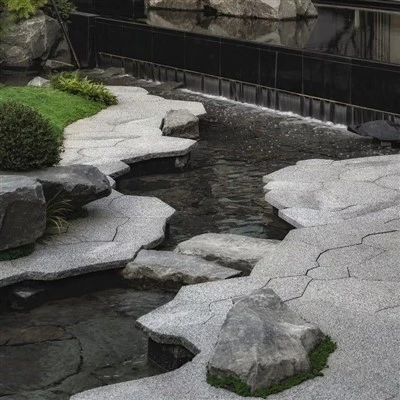
As someone who’s been in the landscape boulders business for 12 years, I’ve learned that the best investments in a landscape are the ones that don’t need constant replacing. A weather-resistant boulder isn’t just a pretty accent—it’s a structure that can anchor a garden, reduce erosion, and add value to a property for generations. Too many customers have come to me after wasting money on a cheap, non-resistant boulder, and it’s always because they didn’t ask the right questions or pick the right rock.
Fabricated Stone If you’re planning a landscape project, big or small, and you want boulders that will stand the test of time, let’s talk. I can help you pick the right type, size, and finish for your space, and answer any questions you have about weather resistance. We work with residential customers, landscape architects, and commercial properties, and all our boulders are tested for durability before they leave our yard. Don’t settle for a boulder that will crack or fade in a few years—invest in one that will be a part of your landscape for decades.
References
- American Geosciences Institute. (2021). "Rock Durability and Weathering in Landscaping." Earth Science Resources for Professionals.
- National Association of Landscape Professionals. (2022). "Choosing Weather-Resistant Hardscaping Materials for Residential and Commercial Spaces." Landscape Management Journal.
- U.S. Geological Survey. (2019). "Igneous and Metamorphic Rock Properties: Density and Resistance to Weathering." Open-File Report 2019-1057.
- Stone Center of the Southeast. (2020). "Salt Resistance of Natural Stone for Coastal Landscaping." Technical Bulletin 412.
Xinglong Landscape Greening Co., Ltd.
We are one of the most professional landscape boulders manufacturers and suppliers in China, also support customized service. We warmly welcome you to wholesale bulk high quality landscape boulders in stock here from our factory. If you have any enquiry about pricelist, please feel free to email us.
Address: Xiaoluli Natural Village, Wutongshan Village, Meishan Town, Changxing County, Huzhou City, Zhejiang Province
E-mail: 18667092034@163.com
WebSite: https://www.xinglonggreen.com/
