If you’ve ever found yourself with a faulty front seatbelt in a GM vehicle and scoured junkyards or aftermarket parts listings for a replacement, you’ve likely stumbled on conflicting advice. Some forums claim any GM front seatbelt will bolt right in, while others swear you need an exact model match, year, even trim level to avoid safety risks. As someone who’s spent the last 12 years as a GM seatbelts supplier, sourcing and testing these parts for repair shops, fleets, and individual owners, I’m here to cut through the misinformation and break down exactly what interchangeability means for GM front seatbelts—why it’s not a one-size-fits-all question, and what you need to know before grabbing that “compatible” part from a listing. GM Seatbelts
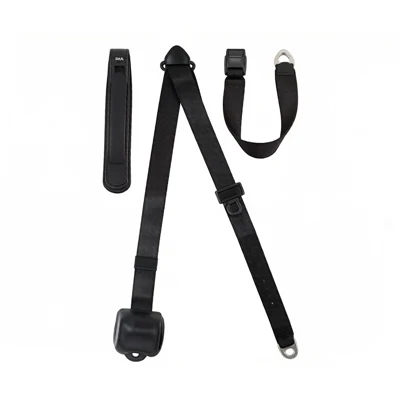
Let’s start with the basics: GM has standardized seatbelt system components across models for decades, but that doesn’t mean every part is interchangeable. The three core parts of a front seatbelt assembly—the retractor (the spool that winds the belt), the buckle (the part that clicks into place), and the latch plate (the metal tab you insert into the buckle)—are engineered to work with each other as a single unit, but individual parts are often specific to a vehicle’s design. For example, a 2018 Chevrolet Silverado 1500 retractor won’t fit the seat mounting points of a 2018 Cadillac Escalade, even though both are GM full-size trucks and SUVs. That’s because GM designs seat structures around crash performance metrics: the height of the B-pillar, the tension load the retractor needs to handle, and the angle of the seat belt path all change based on a vehicle’s weight class, crash test rating requirements, and interior layout.
The biggest myth I see circulating online is that “all GM front seatbelts are the same because GM uses the same parts supplier.” It’s true that GM partners with a small handful of certified seatbelt manufacturers (we’re one of them, for reference) to produce their assemblies, but those suppliers tailor each part to meet GM’s strict model-specific specs. For light-duty cars and compact trucks (like the Chevy Cruze or GMC Canyon), retractors are calibrated to lock at a lower tension threshold, since these vehicles have lower overall weight and slower crash deceleration rates. Full-size pickups and SUVs (like the Silverado or Tahoe) need retractors that engage at a higher tension to hold occupants securely during a crash, given their higher mass and faster crash dynamics. If you swap a compact truck retractor into a full-size SUV, it won’t lock at the right time in a collision—putting the occupant at risk of sliding forward or being injured by the airbag’s deployment.
That’s not to say there are zero interchangeable front seatbelt parts within GM’s lineup, though. For model years 2010 to 2020, GM shared seatbelt components across platform-mate models that share the same core structure and crash testing requirements. The Chevy Equinox and GMC Terrain, for example, use nearly identical front seatbelt assemblies for the same model year range. Their B-pillar height, seat mounting points, and retractor tension specs are so similar that a buckle from a 2017 Equinox will bolt right into a 2017 Terrain without modifications. Similarly, the Chevy Malibu and Buick LaCrosse from 2016 to 2020 share seatbelt assemblies, as they’re built on the same Epsilon II platform. But even with these platform mates, there are caveats: if one model is a base trim and the other is a premium trim with side-impact airbags tied to the seatbelt system, you can’t swap between them. Premium trims often have pretensioners that deploy during minor crashes to pull the belt tight, which are wired to the vehicle’s SRS system—something base trims don’t have, so the wiring harness for the pretensioner won’t match a base model’s system.
Another critical factor many people overlook is airbag compatibility, which is one of the most dangerous areas of seatbelt interchangeability. Modern GM vehicles integrate seatbelt sensors with the supplemental restraint system (SRS) to determine if an occupant is wearing the belt and adjust airbag deployment force accordingly. If you swap a seatbelt from a vehicle with a passenger-side occupancy sensor (like a Cadillac) into a GM model that doesn’t have that sensor, the SRS will trigger a diagnostic trouble code (DTC) and potentially disable the airbag system entirely. That’s a problem because the airbag light will stay on, meaning you have no working airbag in a crash. I’ve had dozens of repair shops reach out to us over the years because they installed a cheap aftermarket “compatible” seatbelt that didn’t match the original vehicle’s SRS wiring, leading to failed state inspections and even crash-related safety issues for their customers.
As a seatbelt supplier, we deal with this confusion every day. We regularly get emails from people who bought a used GM seatbelt from a salvage yard, tried to install it, and found it didn’t fit or caused an airbag light—then reached out to us for a replacement that actually works. Last year, a customer called us panicking because he’d installed a seatbelt from a 2019 GMC Sierra into his 2019 Chevy Silverado, only to find the buckle wouldn’t line up with his seat’s mounting bolts. When he sent us photos, we saw the mounting holes for the buckle were spaced half an inch apart on the Sierra, but an inch apart on the Silverado—two different models from the same year, same manufacturer, same size, and different mounting specs. That’s the kind of detail that doesn’t show up in generic online listings, and it’s why working with a supplier that specializes in GM seatbelts is non-negotiable for anyone doing a repair.
So what should you do if you need a replacement front seatbelt for your GM vehicle? First, start with your exact vehicle’s VIN—this is the single most important piece of information you can have, because it pulls up the exact part number GM used for that specific model, year, trim level, and equipment package. You can find the part number stamped on the original retractor or buckle, but if that’s missing, the VIN is the next best thing. Next, avoid generic claims like “fits all GM 2015-2020” and look for parts that are listed as “platform-compatible” with your specific model. For example, if you drive a 2017 Honda? No, wait—GM: if you drive a 2017 Chevy Cruze, look for parts that are listed for 2016-2019 Cruze, not just any GM compact car.
It’s also important to note that if you’re dealing with a vehicle older than 10 years, GM may have updated the seatbelt assembly for that model year to meet new federal safety standards. For example, in 2007, GM revised front seatbelt retractors across most models to include load limiters, which reduce the force the belt applies to an occupant’s chest during a crash. A 2006 seatbelt won’t have that load limiter, so swapping a 2006 part into a 2007 model could compromise crash safety, even if it bolts in. That’s another reason to verify the part number against your vehicle’s model year and not just assume interchangeability.
I’ve been in this business long enough to see the mistakes people make when they skip these steps. A few years back, a small fleet manager brought in 12 faulty front seatbelts from his company’s 2012 GM Savana vans. He bought a set of 12 used seatbelts from a popular salvage yard site, all listed as “fits GM Savana 2012,” and was shocked when 8 of them didn’t fit the mounting points, and 4 triggered airbag lights after installation. He ended up having to replace all 12 with parts from us, which were matched to his exact Savana’s VIN, and told us the salvage yard had just listed the parts as compatible to move inventory, even though they’d been pulled from 2008 models with different specs. That’s the level of care you need when buying seatbelt parts—this isn’t a floor mat or an air filter that will work no matter what you grab.
At the end of the day, the question of whether GM front seatbelts are interchangeable comes down to context: interchangeable within the same model, same trim, same model year? Almost always, with a few platform-mate exceptions that still require part number checks. Interchangeable across different GM models, weight classes, or SRS equipment levels? Almost never, and attempting to do so can create a dangerous safety hazard, not just an inconvenience.
If you’re working on a GM vehicle and need a replacement front seatbelt, don’t rely on forum myths or generic listings. Reach out to a GM seatbelt specialist who can pull up your VIN, verify the exact part specifications, and provide a part that’s tested to meet GM’s original safety standards. We’ve been supplying certified GM seatbelts for over a decade, and we work with repair shops, fleet managers, and individual owners to cut through the confusion and make sure their seatbelts work safely and fit perfectly. Whether you need a replacement for a compact sedan, a full-size pickup, or a luxury SUV, we can help you find the right part without the guesswork.
Car Seatbelt References:
National Highway Traffic Safety Administration. (2021). Seat Belt Interchangeability and Vehicle Crash Safety. U.S. Department of Transportation.
General Motors. (2019). GM Seatbelt System Specification Manual: 2010-2020 Model Years. General Motors Global Engineering.
Automotive Seat Belt Manufacturers Association. (2022). Model-Specific Seatbelt Calibration for Light, Medium, and Heavy Duty Vehicles. ASMA Technical Report.
Yangzhong Weian Mechanical and Electrical Co., Ltd.
As one of the most professional gm seatbelts manufacturers and suppliers in China, we’re featured by quality products and good service. Please rest assured to wholesale gm seatbelts in stock here and get quotation from our factory. Customized orders are welcome.
Address: Group 10, Xinhua Village, Xilaiqiao Town, Yangzhong City; West of The Bus Terminal On Yuanqu Avenue.
E-mail: hfsaml_2008@qq.com
WebSite: https://www.weianseatbelt.com/
