If you’ve spent any time scrolling through fitness reels, you’ve probably seen that clip of a trainer slapping on wet, lined EMS suits while clients lie on mats, doing less intense moves than you’d see in a typical gym workout. I’m not here to sell you some overhyped workout trend—I run an EMS workout supply company, so I’ve seen this tech move from “weird new thing” to “legitimate tool for real fitness goals” in the last decade. And one question I get every single day from trainers, gym owners, and even regular people is: Can this stuff actually fix muscle imbalances? Short answer: Yes, but only if you use it right. Let’s break that down, no jargon, no salesy fluff, just what I’ve seen work (and what doesn’t) from 10+ years in this space. EMS Workout
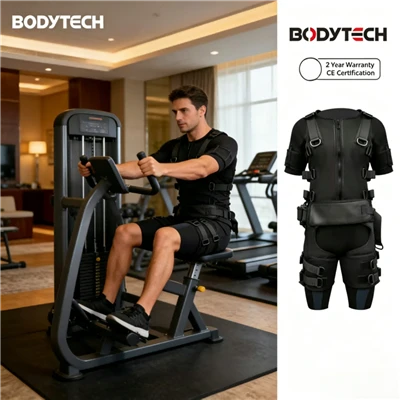
First, let’s make sure we’re all on the same page about what EMS actually does. EMS stands for Electrical Muscle Stimulation, plain and simple. Back in the day, it was mostly used for physical therapy—like when a physical therapist would hook up pads to your quads after knee surgery to keep them from atrophying while you healed. Now, the version we use for workouts is whole-body EMS (WB-EMS), where a full suit lined with electrodes sends low-level electrical impulses to your muscles. Those impulses make your muscles contract, just like when your brain sends a signal to move. The big difference? With a regular workout, only the muscles you’re “using” (like your biceps when you do a curl) contract. With EMS, you’re targeting every muscle group at once, even the ones that are weak or lazy and don’t fire properly on their own.
Muscle imbalances happen when one group of muscles is too tight or too weak compared to their opposing group. Like, if your chest muscles (pectoralis) are super tight from hunching over a computer all day, your upper back (rhomboids, trapezius lower fibers) gets weak because it can’t pull against that tight chest. Or one side of your glutes is weaker than the other, so your hips tilt when you walk. These imbalances don’t just cause soreness—they can lead to bad form, injuries, even chronic pain. The old fix is usually: stretch the tight stuff, strengthen the weak stuff. But getting people to actually do the strengthening part? Half the time, they can’t feel the weak muscle. I’ve had so many clients say, “My left glute feels like it’s not even there when I do clamshells”—that’s a classic imbalance issue. That’s where EMS changes the game.
Here’s why EMS works so well for fixing those weak “lazy” muscles: The electrical impulse overrides your brain’s signal. If your brain is being lazy and not telling that weak glute to activate, the EMS takes over. So during a low-intensity exercise like a wall sit or a bird-dog, instead of just contracting your strong muscles, the EMS makes that wobbly glute fire up. I’ve seen trainers test this in my supply demos: have a client do a glute bridge on a regular day, and they feel more work in their hamstrings than their glutes. Do the same bridge with EMS, and suddenly their glutes are burning so bad they have to pause. That’s the imbalance getting addressed, right there.
But wait—this isn’t a magic fix. You can’t just put on a suit, do 10 minutes of squats, and fix a year of desk posture imbalances in a week. I’ve seen a lot of people make two big mistakes with EMS for imbalances. First, they crank the intensity way too high. When the impulse is so strong that it makes your big, strong muscles (like quads) overpower the weak ones, you’ll just reinforce the imbalance, not fix it. I always tell trainers: Start with a lower intensity, especially on the “stubborn” weak muscles. For glutes or upper back that won’t fire, set the electrodes low enough that you can feel the small muscle contracting, not just your big leg muscles. The second mistake is using EMS as a replacement for targeted, intentional movement. EMS amplifies what you’re doing, but it can’t teach your brain to activate that muscle on its own long-term. So if you do an EMS session where your weak glute fires, you still need to practice that glute activation without EMS later. Otherwise, as soon as the suit comes off, your brain goes back to ignoring it.
Let me give you a real example from a trainer who uses our gear. She owns a small gym in Chicago, mostly caters to people who sit at desks 40+ hours a week. One of her regulars, Sarah, came in with terrible upper cross syndrome—hunched shoulders, tight chest, weak upper back and rhomboids. She’d tried stretching and resistance bands for six months, and said her upper back still felt “dead.” The trainer adjusted the EMS setup: instead of placing electrodes on her chest (which would make her already tight pecs contract more), she shifted the electrodes to her upper back and rhomboids, and kept intensity low. Each session, during 10 minutes of rows (seated, light band rows), the EMS made her weak rhomboids fire. After 8 weeks, Sarah said she could finally feel her upper back working during regular rows, and her posture improved so much she stopped having neck pain at work. That’s the sweet spot: using EMS to activate the muscles that won’t turn on, while pairing it with small, intentional movements to retrain the brain.
Another common imbalance: lower body asymmetries. Like, if your right leg is stronger than your left, which messes up your squat form and can lead to knee pain. EMS can target each leg individually, if you have a suit with separate electrode panels for each side. A lot of the newer WB-EMS suits I supply have that feature, which is a game-changer. Instead of doing a single squat where both legs get the same impulse, you can adjust the intensity on the weak leg to make it contract as much as the strong one. A physical therapist in Portland told me he uses this for post-injury clients: after an ACL tear, one quad is always weaker than the other. With EMS, he can match the contraction strength of both quads during lunges, which helps prevent overcompensation and speeds up the return to full strength.
Wait, but what about people who are already in good shape? Can EMS cause imbalances if you use it wrong? Absolutely. If you’re a runner with strong quads and hamstrings, and you crank the EMS intensity to high during squats, you might make your quads even tighter, throwing off the balance between your quads and hamstrings. So it’s all about targeting, not just cranking the power. That’s why I always recommend that trainers get trained on how to adjust electrode placement and intensity for individual imbalances, not just run the same 20-minute workout for everyone. The suits I supply come with custom workout plans for imbalances, which take the guesswork out of it—no trial and error, just science-backed settings.
I also get a lot of questions from people who say, “I do yoga and Pilates, why can’t that fix my imbalances?” Don’t get me wrong, yoga and Pilates are amazing for flexibility and core strength. But for the muscles that just won’t activate? EMS is a faster, more reliable way to get that initial contraction. Think of it like lifting a heavy box: if you can’t lift it on your own, you ask for help. EMS is the extra hands that make that weak muscle lift for the first time, so you can build up the strength to lift it on your own later. That’s not a knock on yoga or Pilates—it’s a complement. I’ve had clients do yoga three times a week, add two EMS sessions a week focused on their weak muscles, and see faster results than they did in six months of yoga alone.
Now, let’s talk about how to actually use EMS correctly for imbalances, if you’re a gym owner or trainer reading this. First, get a suit with adjustable electrode placement, not a one-size-fits-all. The ones I supply let you move panels around to target specific muscle groups, which is key for imbalances. Second, start with a muscle activation test: have your client do a move that targets the weak muscle (like a glute bridge for glutes) without EMS, and ask them to rate how hard it is to feel that muscle. Then, with EMS, adjust the intensity until that weak muscle is firing at the same strength as the strong one. Third, pair every EMS workout with 5-10 minutes of “dry” exercises (without EMS) that target the same weak muscles. That way, you’re not just relying on the suit—you’re retraining your brain to activate that muscle on its own. Fourth, don’t overdo it. I recommend 2-3 EMS sessions a week max for imbalance work, because the muscles need rest to repair and get stronger. Too much EMS can lead to soreness or even overcontraction, which makes imbalances worse.
I’ve been in this industry long enough to see the hype around EMS fade a little, but the real, science-backed benefits for muscle imbalances stay. The key is that it’s a tool, not a replacement for hard work. A lot of people treat it like a quick fix, but the ones who see results are the ones who use it intentionally, targeting the specific weak muscles, not just cranking up the intensity to feel a burn.

If you’re a trainer, gym owner, or someone interested in bringing EMS imbalance training to your space, I’m here to help. I supply WB-EMS suits, custom workout plans, and on-site training for your staff so you can make sure you’re using the tech correctly, not just wasting money on something that doesn’t work. I’ve helped over 200 facilities across the country add EMS to their programs, especially for imbalance work, and every time I hear back that their clients’ pain and imbalances are improving, it makes this job worth it.
Professional EMS Machine References
- American Council on Exercise (ACE). Whole-Body Electromyostimulation: What It Is and What the Research Says.
- Journal of Strength and Conditioning Research. Electromyostimulation for Muscle Imbalance Correction: A Systematic Review.
- Physical Therapy in Sport. The Role of Electrical Muscle Stimulation in Postural Correction and Muscle Activation.
- Medicine & Science in Sports & Exercise. Neuromuscular Electrical Stimulation for Improvements in Muscle Function and Symmetry.
Guangdong Bote Health Technology Co., Ltd.
Guangdong Bote Health Technology Co., Ltd. is one of the most professional ems workout manufacturers and suppliers, featured by quality products and good price. Please rest assured to buy bulk CE approved ems workout made in China here and get quotation from our factory. Customized orders are welcome.
Address: D407 KEZHU Business Building, No.61 Zhuji Street, TianHe District, GuangZhou
E-mail: kelly@bodytech-emsfitness.com
WebSite: https://www.bodytech-emsfitness.com/
