Hey there, thanks for swinging by—if you’ve ever stood near a big metal fabrication shop or watched a team build massive parts for airplanes, heavy trucks, or even wind turbine components, you’ve probably seen a gantry milling machine at work. Maybe you didn’t even notice it, hidden behind stacks of raw steel or the roar of other tools, but trust me—this machine is the unsung hero of making big, precise stuff. As a gantry milling supplier, I get questions all the time from new operators, shop managers, and even hobbyists (though those are way less common) asking how it actually works, not just what it does. Let’s break it down straight, no stuffy engineering jargon, just the real principle behind these bad boys. Gantry Milling

First, let’s skip the basic “what is a mill?” recap—you already know it cuts material, right? A gantry milling is just a bigger, beefier version, built for jobs that regular knee mills or even vertical turret mills can’t handle. If you’ve ever tried to cut a 10-foot long steel beam with a handheld saw, you get why size matters here. The core principle of any mill is removing material with a rotating cutting tool, but the gantry’s whole design is built to solve two huge problems with big parts: weight and stability. Let’s talk about the frame first, because that’s where the magic starts. A gantry’s frame is this huge, rigid bridge-like structure—hence the “gantry” name, like a crane’s gantry. Unlike smaller mills where the cutting head is mounted on a arm that moves over the part, a gantry’s gantry (that bridge part) straddles the entire workpiece. The part you’re cutting sits on a big, heavy table that stays pretty much in place, and the cutting head slides along the gantry’s horizontal beam, plus it moves up and down too, and the whole gantry might even roll along rails set into the shop floor. That setup sounds simple, but it’s the key to stability. Think about it: if your part is 20 tons of aluminum for a plane’s wing spar, you don’t want to move that thing back and forth to cut it—too heavy, too hard to align. Instead, you lock the part down tight, and move the light, precise cutting head around it. No bending, no flex, no weird shifts that mess up the cut. That’s the first big principle: decoupling the workpiece’s weight from the cutting motion.
Next, the cutting system. Most gantry mills use what’s called a multi-axis cutting head, but let’s keep it real—no “axis terminology overload.” The head has a spindle that spins the end mill (that’s the cutting tool) at super high speeds, sometimes thousands of RPM. What makes it different from a small mill’s spindle is the power: gantries need enough force to chew through thick steel, titanium, or even solid granite (yeah, we cut stone too for sculptures and monuments). The cutting action here is just like drilling a hole, but in reverse: instead of the tool spinning into the material, it’s moving along X, Y, Z paths to carve out whatever shape you need. Wait, but why is it called “milling” then? Milling is about creating complex 2D or 3D features—grooves, slots, contours, even holes with perfect spacing. For big parts, that’s way more efficient than doing each cut separately.
Then there’s the precision part. A lot of guys I work with (my clients) think gantries are just “big rough cutters,” but no—we build them for tight tolerances too, like holding a 0.001 inch gap over a 15-foot length. How? The gantry’s beams and rails are made from heavy cast iron or steel, not flimsy stuff. We precision-grind every rail so there’s no wobble, and the linear guides (the things the head slides on) are preloaded to eliminate play. Oh, and most modern gantries run on CNC—computer numerical control, if you didn’t know the缩写. That means you program the exact cut path into a computer, and the machine does all the moving automatically, no human pushing levers. That’s a huge win for consistency, especially when you need to make 10 identical big parts for a truck fleet.
Wait, let’s clear up a common mix-up between gantry mills and other big machines. A horizontal boring mill is also big, right? But it’s got a single spindle that moves, and the part is usually clamped to a fixture that might shift a little. A gantry’s table is stationary, so the whole load of the part is sitting on the shop floor’s foundation, not on the machine’s moving parts. That means you can run way heavier parts, up to hundreds of tons, without the machine straining. We’ve had clients bring in 50-ton marine engine blocks for us to mill, and the gantry just plows through it without even a noticeable vibration. That’s the principle of rigidity: designing the machine so all forces from cutting are absorbed by the frame, not transferred to the part. No flex, no misalignment, perfect cuts every time.
Another thing people ask: why do some gantries have two cutting heads? Oh, right! Dual-head gantries are a game-changer for production. You can set one head to cut a slot and the other to drill holes at the same time, doubling the speed without losing precision. That’s all built on the same core principle—moving the tool instead of the part, so both heads can slide along the same gantry without interfering. We’ve sold a lot of dual-head gantries to bridge builders, who need to cut dozens of identical steel girders every month. They cut their lead times in half, which is massive when a bridge project is on a tight schedule.
Now, let’s get into how the cutting principle actually works at the micro level, because it’s not just big metal—even small parts get precise cuts. The end mill has multiple cutting edges, right? When it spins, each edge scrapes off a tiny chip of material, chip after chip, until the shape you want is left behind. For gantries, we use different end mills depending on the material: solid carbide for hard steel, diamond-coated for aluminum (it doesn’t gum up the tool), even polycrystalline diamond for super-tough stuff like titanium. The key here is feed rate—how fast the tool moves along the part—and depth of cut. Too fast, and you’ll snap the end mill or leave a rough surface; too slow, and you’re wasting time. A good gantry lets you adjust those parameters automatically via the CNC, so even a new operator can get perfect cuts without guessing.
Wait, let’s talk about common myths I hear all the time. Some folks say gantry mills are only for industrial shops with 100 employees. No way—we’ve sold small, compact gantries to local machine shops that do custom parts for farmers, or even artists making large sculptures. The compact ones follow the same principle: rigid frame, stationary table, moving head. They just have smaller rails and a lighter spindle, so they fit in a 20×30 shop instead of a 50×100 fabrication facility. Another myth: gantries are expensive to run. Yeah, upfront cost is higher than a small knee mill, but the labor savings and precision mean you make up the cost fast, especially on big jobs. I’ve had a shop owner tell me his old mill took him 2 weeks to cut a single crane arm; with his new gantry, he does 3 in the same time. That’s not just efficiency—that’s money in his pocket.
Let’s circle back to the core principle to make sure it’s clear. Any gantry milling machine operates on three foundational ideas: first, the workpiece is supported on a fixed, heavy table to handle extreme weight and alignment; second, the cutting assembly (spindle, tool) is mounted to a rigid, movable gantry that straddles the workpiece, eliminating the need to move heavy parts; third, precision is maintained through rigid construction, precise guides, and CNC control to ensure consistent, accurate cuts even across huge dimensions. That’s it—simple, but so effective.
Now, as someone who builds and sells these machines, I can tell you that the best gantries aren’t just about size. It’s about how well they hold true to that core principle. A cheap gantry with a flimsy frame will flex when cutting thick steel, leading to messed up parts and wasted materials. A good one we manufacture? It has a frame made from 12-inch thick cast iron, precision-ground rails, and a CNC system that can hold tolerances of 0.0005 inches over a 20-foot length. That’s the difference between a machine that’s a hassle and one that’s a workhorse that runs for 20 years.
If you’re a shop manager looking to upgrade your milling capacity, or a fabricator who’s tired of struggling with big parts, I get it—choosing the right machine is a big deal. You don’t want to drop a ton of cash on something that doesn’t fit your needs. That’s why I’m here, not just as a supplier, but as someone who’s been in the shop floor watching guys use these machines for years. Whether you need a compact gantry for small custom parts or a heavy-duty one for marine or aerospace work, we can hook you up with a machine that’s built on that core principle of stability, precision, and durability.
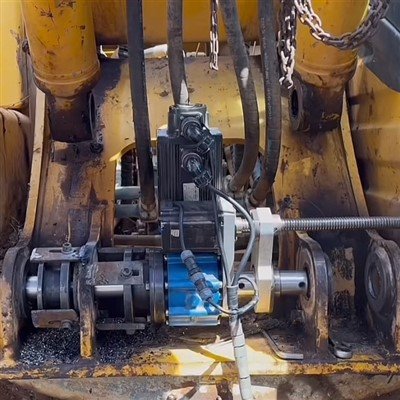
Wait, one last thing for the new folks out there. If you’re just learning about gantry mills, don’t let the size intimidate you. They’re not just for giant corporations—they’re for anyone who needs to cut parts too big for a regular mill. And with modern CNC, they’re way easier to operate than they used to be. A lot of our clients say once they switch to a gantry mill, they can’t go back.
Gantry Milling If you’re curious about upgrading, have questions about specs, or want to talk through what kind of machine would work for your jobs, hit me up for a chat. No sales pitch, no jargon, just straight talk about what your shop needs. Let’s make your next big project a little less stressful.
References
- Gantry Milling Machines: Design, Operation, and Industrial Applications, Manufacturing Engineering Association, 2022
- Precision Machining for Large-Scale Components, Journal of Manufacturing Processes, Vol. 47, 2021
- Rigidity Principles in Large Machine Tools, International Journal of Machine Tools and Manufacture, Vol. 165, 2021
Shangqiu JDA Machinery Technology Co., Ltd.
With abundant experience, we are one of the most professional gantry milling manufacturers and suppliers in China. We warmly welcome you to buy cheap gantry milling for sale here from our factory. Quality products and reasonable price are available.
Address: No. 55 Pingyuan Middle Road, Liangyuan District, Shangqiu, Henan, China
E-mail: sales@jdamachines.com
WebSite: https://www.jdamachines.com/
