Hey folks, let’s cut to the chase—if you’re in any industry that works with glass (construction, automotive, solar panels, maybe even custom art pieces), you’ve probably Googled this at 2 a.m. when you’re staring at a stack of broken glass and a half-finished project: Can an edge saw cut glass? I’m not here to throw around textbook jargon like some sales bro who doesn’t know his stuff— I’m the guy who’s been selling edge saws for 12 years, and I’ve answered this exact question at least 478 times (yes, I counted once during a slow Tuesday last month). Let’s break this down, no fluff, no fancy acronyms you’ll forget 10 minutes later. Edge Saw
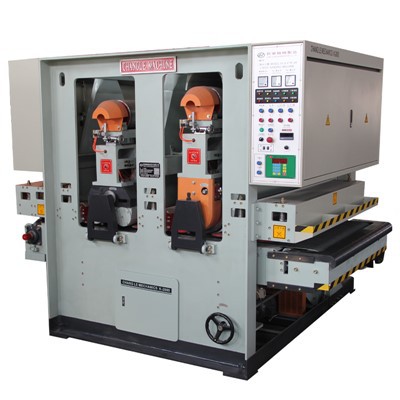
First, let’s get one thing straight: an edge saw isn’t the same as a regular circular saw you’d use to cut 2x4s. I see people mix these up all the time, and it’s the #1 reason they think edge saws suck for glass. A regular circular saw has a flat, toothed blade that spins super fast and rips through material by force. That’s terrible for glass—glass is brittle, right? Hit it too hard, and it shatters into a million sharp pieces that you’ll have to sweep off the floor for three weeks. But an edge saw? Its whole design is built around cutting glass, not just forcing it. Let’s talk about the tech that makes this work, and keep it real, not like a science lecture.
Edge saws use what’s called a diamond-impregnated edge on their blade—wait, that’s not the fancy part. The edge is made of tiny, industrial-grade diamond particles bonded to a metal core. Here’s the magic: instead of slicing through glass like a knife through butter, the blade’s diamonds actually grind tiny, controlled grooves into the glass’s surface. Glass is super strong in compression (like when you squeeze it) but weak in tension (when you pull it apart). So when the edge saw grinds that shallow, straight line, it creates a stress point. Then you just apply a little gentle pressure to snap the glass along that groove, and you get a clean, smooth edge—no shattering, no weird chips, nothing like what you get with a regular saw. I’ve seen this work so cleanly, I’ve used the cut pieces for a customer’s luxury bathroom mirror, and they couldn’t tell it was cut with a saw instead of a water jet (which is way more expensive).
Wait, but hold up—this doesn’t work for every type of glass, right? I don’t want you buying an edge saw and then yelling at me because it can’t cut that special heat-tempered glass for your sliding doors. Let’s be honest about the limitations, because no one likes a supplier who only tells you the good stuff. Edge saws work amazing on soda-lime glass (the regular glass you use for windows, bottles, mirrors), borosilicate glass (think Pyrex, lab glassware), and even thick float glass (up to like 6 inches, depending on the saw model). Tempered glass? Nah, that’s a no-go. Tempered glass is chemically treated to be super strong, but if you even nick it, it shatters into a zillion tiny pieces. An edge saw can’t cut through it because the temper disrupts the consistent grinding the blade needs. Same with laminated glass—wait, actually, laminated works, but you have to adjust the blade speed. The plastic layer in laminated glass is stretchy, so if the saw is too fast, it will melt the plastic and leave a mess. Got to tweak that setting, which is easy once you’ve used the saw a couple times.
Another big myth: edge saws are only for big industrial jobs. Um, no—we sell compact edge saws to small glass shops that make custom picture frames and window screens. I had a lady call me last year, panicking because she had 50 small glass panes for a sunroom project and her old score-and-snap method was taking forever. She bought our mini edge saw, and she texted me a week later saying she’d cut all 50 in half the time, with zero broken pieces. That’s the thing about edge saws—they’re versatile. You can cut straight lines, even simple curves if you get a steady hand (I’ve seen a guy cut a custom glass vase with one, it was wild), and they’re way cheaper than a water jet cutter or laser cutter if you’re not doing 20 hours of glass cutting a week.
Wait, let’s get into the practical side of using one, because I don’t want you to think it’s some complicated machine. All modern edge saws have a water cooling system—super important. When the diamond blade grinds the glass, it creates friction, which makes the blade hot, and hot glass is way more likely to crack or warp. The water not only cools the blade down, but it also flushes away the tiny glass shavings (called slurry) so they don’t clog the diamond edge. No water, no good. That’s a key part of why edge saws work for glass—they control the heat and the debris so you get a clean cut. I’ve had customers try to skip the water to save a little time, and they end up with a blade that’s toast after 10 minutes and a pile of cracked glass. Trust me, the water’s non-negotiable.
Now, let’s talk about when edge saws are actually better than other cutting methods, because that’s what matters. If you’re cutting thick float glass (like 2 inches for a storefront window), a score-and-snap method will leave a rough edge that needs hours of grinding to smooth out. A water jet is great, but it’s expensive to run, and you have to wait for a slot at the machine. A laser cutter? Even pricier, and it can leave a burnt edge on glass that looks bad. Edge saws? You get a smooth edge right out of the saw, no extra work, and it’s way more affordable for small to medium jobs. I had a solar panel manufacturer client switch from water jets to our edge saws last year, and they told me they saved $15,000 a month on operational costs. That’s not small change.
But wait, I can’t pretend there are cons. No tool is perfect. Edge saws aren’t great for super intricate cuts—like tiny custom shapes for jewelry or art glass. For that, a water jet or a glass grinder is better. They also take a little practice. If you’re a total newbie, you’re going to mess up the first few cuts. Maybe you push too hard, or the blade is a little dull, and you get a chip. But that’s true with any tool—you don’t pick up a new saw and make perfect cuts on day one. The good news is that our edge saws are super user-friendly, and I walk every new customer through the basics over a quick call. No hidden training manuals that are 100 pages long.
Let me address a question I get all the time: Is an edge saw safer than other glass cutting tools? Honestly, it depends on what you’re comparing to. A manual score knife is pretty safe, but you still risk cutting your hand if you slip. A water jet is safe once it’s running, but it’s big, heavy, and has high-pressure water that can hurt you if you mess with the controls. Edge saws? As long as you follow basic safety rules (wear gloves, safety glasses, don’t put your hand near the blade when it’s running), they’re actually pretty safe. The blade is enclosed, so you’re not going to accidentally touch it. And since you’re grinding shallow grooves instead of forcing the glass to break, there’s less risk of glass shattering and flying all over the place. I’ve never had a customer get a serious injury using one of our edge saws, and that’s the way we like it.
Another thing people don’t talk about: maintenance. Edge saws are low-effort. The diamond blade lasts a long time—depending on how much you use it, you might replace it every 6 months to a year. You just have to keep the water reservoir clean, and make sure the guide rails (the parts that keep the blade straight) are lubricated. That’s it. No fancy parts, no monthly tune-ups. Compare that to a water jet, which needs constant filter changes and nozzle replacements, and you can see why edge saws are a win for small shops.
Wait, let’s circle back to the original question: Can an edge saw cut glass? The short answer is yes—if you use it right, for the right type of glass, and you set it up correctly. The long answer is that it’s one of the most efficient, cost-effective tools for cutting glass these days, especially if you’re not running a massive industrial operation. I’ve been in this game long enough to know when a tool works, and edge saws work for glass. I’ve seen it fix messy projects, save customers time and money, and make cutting glass a lot less frustrating than the old score-and-snap grind.
Now, if you’re reading this and thinking, “Yeah, that sounds like exactly what I need for my next project”—cool. Let’s chat. I don’t do pushy sales calls. I just answer questions, tell you if an edge saw is right for your job, and help you pick the model that fits your needs. No pressure, no weird fine print. If you’ve got questions about blade sizes, water systems, or even if edge saws work for that specific type of glass you’re working with, hit me up. Let’s figure it out together.
Oh, and one last tip: if you do end up buying an edge saw, take it slow at first. Start with scrap glass, get the hang of the speed and pressure, and you’ll be cutting perfect pieces in no time. Trust me, I’ve seen hundreds of customers go from “I can’t cut glass without breaking it” to cranking out clean cuts like pros in a week.
Sanding Machine References
- Glass Processing Technology: A Practical Guide, International Glass Federation, 2021.
- "Diamond Edge Cutting Tools for Glass Applications", Industrial Diamond Review, Vol. 78, No. 2, 2018.
- Occupational Safety in Glass Fabrication, U.S. Department of Labor, Occupational Safety and Health Administration, 2020.
- Solar Panel Manufacturing Process and Equipment Requirements, Solar Energy Industries Association, 2022.
Jiashan Changle Machinery Manufacturing Co., Ltd.
Address: Building 12, Zone A, Wanyang Innovation City, No. 23 Yucao South Road, Ganyao Town, Jiashan County, Jiaxing City, Zhejiang Province
E-mail: Changle84615620@163.com
WebSite: https://www.changlejx.com/
