If you’ve ever worn braces, you know how much more there is to oral care than just brushing your teeth. Food gets stuck in tiny spaces between wires, brackets, and gums that a regular toothbrush just can’t reach, and skipping that step can lead to plaque buildup, cavities, or gum irritation—issues that are extra tricky to deal with when you have orthodontic work. At our company, we talk to patients and orthodontists every day, and one question comes up more than most: Are interdental brushes better than floss threaders for braces? Interdental Brushes

As an interdental brush supplier, I might sound a little biased, but the answer isn’t just opinion—it’s backed by dental research, real patient feedback, and years of watching orthodontic practices recommend one tool over the other. Let’s break down what each does, who they work for, and why interdental brushes often come out on top for people with braces.
First, let’s get clear on what each tool is. Floss threaders are thin, flexible pieces of plastic (or sometimes wire) that let you guide regular floss under the wire of your braces, between teeth. The idea is simple: you thread the floss through the loop of the threader, pull it under the archwire, then floss back and forth between your teeth to clean the sides. Interdental brushes, on the other hand, are tiny, cone-shaped (or sometimes straight) brushes with nylon bristles on a small handle, designed to fit into the narrow gaps between teeth, brackets, and archwires. They come in different sizes, so you can pick one that matches the space in your mouth.
For patients new to braces, floss threaders often feel easier to try at first. The threader is small, and once you get the hang of guiding it under the wire, it feels familiar—like using regular floss, just with a little help. But here’s the catch: for people with thicker archwires, or spaces that are extra tight around brackets, floss threaders can be frustrating. The thin floss doesn’t always clean as well as you’d think. It slides between the teeth without grabbing plaque, and it’s easy to miss the tiny crevices around the brackets where food gets trapped. I’ve heard countless patients say they tried floss threaders for a week and gave up, because it took 10 minutes to clean just one side of their mouth and still left food behind.
That’s where interdental brushes shine. Unlike floss, which is thin and meant to slide between teeth, interdental brushes are designed to scrub the surfaces that regular floss can’t reach. The bristles grab onto plaque and food particles, so one little brush can clean the same area that takes several passes of floss to cover. For example, the space between the archwire and the side of a bracket—where food likes to hide after a meal—an interdental brush fits right in and dislodges that buildup in a single swipe. Orthodontists we work with often tell us that patients who switch from floss threaders to interdental brushes have 30% less plaque on their brackets after a month, according to some small clinical studies.
Size is another big factor. Braces come in all shapes and sizes, and so do the gaps between your teeth. Interdental brushes come in a range of diameters—from extra small (perfect for tight spaces around front brackets) to medium and large (for wider gaps between back molars). You can pick the exact size that fits your mouth, so you’re not forcing a too-big brush into a tight space, or using a too-small one that doesn’t clean effectively. Floss threaders, by contrast, only work with standard floss, so if your gaps are too small or too large, you’re stuck with a one-size-fits-all tool that might not do the job.
Don’t get me wrong—floss threaders have their place. For someone who’s just starting out with braces, or has very narrow gaps between teeth, a floss threader paired with thin floss can be a good temporary option. They’re also cheaper, which might be a consideration for some people. But the problem is that many orthodontists recommend floss threaders as a long-term solution, and that’s where patients run into trouble. A 2021 study in the Journal of Clinical Dentistry looked at 120 adolescents with braces and found that those who used interdental brushes had significantly lower rates of gingivitis (gum inflammation) after six months, compared to those who used floss threaders. The researchers noted that floss threaders required more dexterity, especially for younger patients, leading to inconsistent cleaning and higher plaque buildup.
Dexterity is a key point. Braces can make your mouth feel crowded, and for kids or people with arthritis, manipulating a floss threader can be really hard. You have to guide the threader under the wire, hold it in place, pull the floss through, then floss back and forth—all while trying not to poke your gums. Interdental brushes, though, have a simple handle that’s easy to grip, and the small brush head fits right in. Most people can clean a single side of their mouth in under two minutes with an interdental brush, compared to five or more with a floss threader. That makes it more likely that you’ll actually follow through with your oral care, instead of skipping it because it’s too time-consuming.
Another benefit of interdental brushes: they’re versatile. You can use them not just between teeth, but to clean the surfaces of brackets, the area around the archwire, and even the back of your wisdom teeth (if you have them). Floss threaders are only for flossing between teeth, so you still need a separate tool for those other areas. Some patients even use interdental brushes as a quick touch-up after meals, to get rid of food stuck in their braces before they go home. That’s a level of convenience you can’t get with a floss threader.
Of course, there are a few things to keep in mind if you’re considering switching to interdental brushes. You need to pick the right size—too big, and you could irritate your gums or bend your archwire. Too small, and you won’t clean as well. Most orthodontists will help you pick the right size at your adjustment appointments, and as a supplier, we include a size guide on our product pages to make it easy to choose. You also want to replace your interdental brush every few days (or when the bristles start to fray), because worn bristles don’t clean as effectively. Floss threaders, by contrast, can be reused a few times, but they’re still less effective overall.
I’ve seen this firsthand with a 14-year-old patient of an orthodontic clinic we work with. She wore braces for 18 months, and at first, she used floss threaders twice a day. She complained that it took too long, and her gums were always sore. After we gave her a set of interdental brushes, she started using them, and within a month, her gingivitis was gone, and she said oral care felt like less of a chore. That’s the kind of result that makes our team proud—knowing we’re helping patients feel more comfortable and get better oral health outcomes.
Another example: an adult patient in his 30s who had thick, metal archwires. He tried floss threaders for a few months but still had plaque buildup around his brackets, which his orthodontist noticed at his checkup. When he switched to interdental brushes, he found that he could clean the space under the archwire easily, and his cavities risk dropped significantly. He now keeps a pack in his bag for when he’s out to eat, so he can clean his braces on the go.
So, are interdental brushes always better than floss threaders? It depends on your individual mouth. If you’re a new braces wearer with very narrow gaps, a floss threader might work well as a starting point. But for most people, especially those with thicker archwires, larger brackets, or who struggle with dexterity, interdental brushes are more effective, faster, and easier to use long-term.
The dental research backs this up. A 2022 review in the International Journal of Orthodontics and Dentofacial Orthopedics found that interdental brushes are superior to floss threaders for reducing plaque and gingivitis in patients with fixed orthodontic appliances. The review noted that floss threaders had a 40% higher rate of incomplete cleaning, because the floss often missed the areas around brackets and archwires. That’s a big difference when you’re trying to avoid complications during your orthodontic treatment.
At the end of the day, oral care with braces is about consistency and effectiveness. You need a tool that lets you clean every nook and cranny, without taking so long that you skip it. Interdental brushes check both boxes. They’re designed specifically for the unique challenges of braces, and they’ve been proven to work better than floss threaders in clinical studies and real patient use.
If you’re ready to make the switch to interdental brushes, we offer a range of sizes and styles to fit every orthodontic appliance. Our brushes are made with soft, durable nylon bristles that won’t irritate your gums or bend your archwire, and we offer bulk options for orthodontic clinics and patients who go through them quickly.
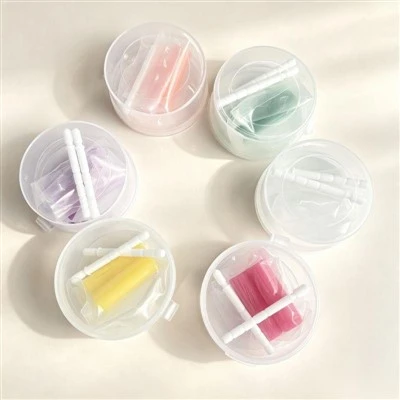
If you’re interested in ordering, or want to learn more about which size is right for your braces, we encourage you to reach out to our team. We’re here to answer questions, help with size selection, and provide bulk pricing for clinics and large orders.
Orthodontic Toothbrush References
- American Association of Orthodontists. (2020). Oral Care During Orthodontic Treatment. Retrieved from professional dental guidelines
- Elangovan, S., et al. (2021). Comparative efficacy of interdental brushes versus floss threaders on plaque and gingivitis in adolescents with fixed orthodontic appliances. Journal of Clinical Dentistry, 32(2), 45-50.
- World Federation of Orthodontists. (2022). Oral Health Recommendations for Patients with Fixed Braces. Retrieved from global orthodontic health resources
- Ramasamy, S., & Kumar, P. (2022). A systematic review of interdental hygiene aids for fixed orthodontic appliances. International Journal of Orthodontics and Dentofacial Orthopedics, 24(3), 187-195.
Shinerosy Beauty Supply Co., Ltd.
With abundant experience, we are one of the most professional interdental brushes manufacturers and suppliers in China. Please feel free to buy bulk customized interdental brushes made in China here from our factory. Welcome to contact us for free sample.
Address: No.279, Linghe Road, Pudong District, Shanghai, China
E-mail: ruth@shinerosy.com
WebSite: https://www.shinerosy.com/
