Hey there, if you’ve ever hung around a fabric factory, a upholstery shop, or even a footwear production line, you’ve probably seen a big, loud machine slicing through stacks of material like it’s butter—no jagged edges, no wasted bits, no waiting forever for it to finish. For years, most of those machines were either manual, hydraulic, or basic pneumatic units that could only do so much: they’d cut crooked lines, leave frayed edges if you pushed too fast, and you’d have to adjust the pressure every single time you switched to a thinner or thicker material. That’s where the walking beam servo cutting machine comes in, and trust me, it’s changed the game for small shop owners and big manufacturers alike. Servo Cutting Machine
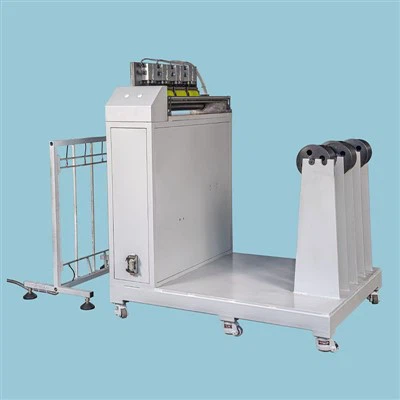
First off, let’s break down what the heck a “walking beam” even means, because that part threw me off when I started working with these machines three years ago as a servo cutting machine supplier. The “beam” is that long, horizontal metal arm that moves back and forth over the cutting area—kind of like a seesaw, but way more precise. And it “walks” because instead of just lifting straight up and down, it glides along a set of linear rails, so it doesn’t jerk or shift mid-cut. The “servo” part is the star here. Servo motors are way different from the regular old electric motors you find in your blender or a basic fan—they can adjust their speed, torque, and position in tiny increments, like down to a fraction of a millimeter. No more overshooting a line or slamming into a material because the motor got overworked.
Wait, let’s make that super clear. If you had a traditional hydraulic cutting machine, it uses pressure from fluid to push the blade down. That pressure is fixed unless you manually twist a valve every time. So if you’re cutting 10 layers of thin cotton, you use low pressure; switch to 2 layers of thick foam for a couch cushion, you crank the pressure up. But get that pressure wrong, and you either cut through all layers plus the table below (wasting material) or only cut the top layer (wasting hours redoing it). The servo motor in a walking beam machine adjusts that pressure automatically. It calculates how much force the blade needs based on what material you loaded, how many layers, and even the length of the cut, so you never have to tweak a dial mid-job. That’s a huge time-saver.
Now, how does the walking beam design work in practice, not just the parts? Let’s walk through a typical job. Say a customer needs 500 pairs of work boots, each with a upper cut from thick full-grain leather. They load a stack of 15 leather hides onto the machine’s cutting table, punch in the material type and layer count on the touchscreen, and hit start. The walking beam slides slowly over the stack, the servo motor controls the blade’s descent speed and pressure, and when it hits a pre-programmed cut line, it starts slicing. The beam doesn’t stop and lift up after each cut—wait, that’s the “walking” part: it moves forward just enough, the blade drops, cuts, then rises just as the beam glides ahead to the next section. So it’s a continuous motion, not stop-go-stop, which cuts cycle time by like 30% compared to older machines. For a factory pumping out thousands of parts a week, that adds up to days of extra production time.
I hear some folks ask, “Why not just use a flatbed CNC cutting machine? Those are super precise too.” Good question. Flatbeds are great for small, intricate parts—like if you’re cutting lace for wedding dresses or custom embroidery appliques. But they’re slow for bulk, thick materials, and they take up a ton of floor space. Walking beam machines? They’re compact, way faster for consistent bulk cuts, and their blade system is built for heavier materials: leather, foam, rubber, even thin cardboard or fabric. I’ve had customers switch from flatbeds for their core bulk work and cut their production time in half, and still use flatbeds only for the small, detailed custom pieces. That’s the sweet spot.
Another big win with these machines is material waste. Old cutting machines often left jagged edges or inaccurate cuts, so you’d have to leave extra space between parts just to make sure you didn’t cut the wrong spot. Walking beam servo machines have that servo precision, so the cuts are dead-on. I worked with a small upholstery shop last year that was wasting 12% of their leather every cut because of inaccurate blades. After they got their walking beam machine, that waste dropped to 4%—that’s thousands of dollars saved on leather alone, every month. Not to mention, the servo motor is way more energy efficient than hydraulic motors, which use tons of power just to keep pressure ready even when the machine’s not cutting. A lot of my customers have told me their electric bill dropped by 25% after switching to servo models.
Wait, let’s get real about the downsides, because I’m not here to hype something that’s perfect. Walking beam servo machines are more expensive upfront than basic pneumatic or hydraulic models. But that extra cost pays for itself in less than a year, usually from saved labor, material, and electricity. Also, they do require a little more maintenance than older machines—you have to lubricate the linear rails every few months, check the servo motor’s connections, and make sure the blade is sharp (duh, blunt blades cause bad cuts no matter the machine). But it’s not rocket science—our team shows every customer how to do that in a 20-minute training session when they take delivery, and we’re on call 24/7 if something comes up.
Let me also clear up a common misconception: these machines aren’t just for big factories. We’ve sold walking beam servo cutters to small startups making custom purses, to tailors with 2-3 shop locations, even to costume shops that need to cut layers of felt and vinyl for Halloween and theater productions. The touchscreen is super user-friendly—no coding required, you just select your material from a pre-loaded list, or input custom settings if you have something weird, like neoprene for wetsuits. A part-time employee with no technical background can run it after an hour of training.

Over the years, I’ve seen so many customers struggle with older cutting machines that couldn’t keep up with their orders. One guy had a small footwear business, and he was working 12-hour days cutting by hand and half the night fixing botched cuts. After he got his walking beam servo machine, he moved to 8-hour days, hired two more people for assembly, and doubled his revenue in a year. That’s the real impact of these machines—they don’t just make cutting easier, they let businesses grow without burning out the team.
Corrugated Fin Forming Machine If you’re a shop owner or production manager tired of wasting material, losing money on slow cuts, or dealing with finicky old machines that break down every other week, a walking beam servo cutting machine is probably worth checking out. We’ve helped hundreds of clients find the right size and model for their needs, whether they’re cutting small batches of custom parts or 10,000 units a month of bulk material. If you want to chat through what your production needs are, feel free to reach out to us to talk through options, compare specs, or even arrange a demo so you can see it in action. No sales jargon, no pressure—just straight talk about what works for your business.
References
- “Servo Motor Technology for Industrial Cutting Machinery” – Industrial Automation Journal
- “Material Efficiency in Textile and Leather Cutting: A Comparative Analysis of Cutting Systems” – Journal of Manufacturing Processes
- “Walking Beam Machine Design and Operational Efficiency” – International Journal of Production Research
Suichang Lvye Machinery Co., Ltd.
We are one of the most professional servo cutting machine manufacturers in China, also support customized service with low price. We warmly welcome you to buy discount servo cutting machine for sale here from our factory. If you have any enquiry about quotation, please feel free to email us.
Address: No.402, Mudanting East Road, Miaogao Street, Suichang County, Lishui City, Zhejiang Province
E-mail: L528753@outlook.com
WebSite: https://www.suichanglvye.com/
