If you’ve ever pulled on a pair of crew socks that slid down your ankles mid-commute, or slipped into ankle socks that bunched up around your toes after just 10 minutes at the gym, you’ve encountered the small, frustrating problem that socks dotting machines solve. As a socks dotting machine supplier who’s worked with sock manufacturers across three continents over the past 12 years, I get to talk to people all day who think these machines are just another “random piece of factory equipment” — and I’m here to set the record straight. They’re not. They’re the quiet workhorses that turn a basic sock into a functional, comfortable product that keeps customers coming back, and today I want to break down exactly what they do, why they matter, and how a good one can make or break a sock brand’s success. Socks Dotting Machine

Let’s start with the basics, because when I first got into this industry, I had no clue what a dotting machine was either. Back in 2011, I was running a small sock-making workshop in Guangzhou, trying to figure out how to stop our basketball socks from slipping inside athletic shoes after every game. A friend who ran a factory in Taiwan mentioned he used a dotting machine to put small rubber dots on the sole of the sock, and I was skeptical. “Dots? Really? That’s going to fix the whole slippage issue?” I thought. Spoiler: it did. Those dots created friction between the sock and the shoe’s insole, so when I jumped, ran, or pivoted, the sock stayed right where it was. No more adjusting mid-play, no more blisters from fabric rubbing raw. That’s when I realized these machines aren’t just for putting dots on socks — they’re for solving real, everyday problems that manufacturers and consumers don’t even know they have.
So, what exactly is a socks dotting machine used for? At its core, it’s a piece of automated industrial equipment designed to apply precise, uniform layers of non-slip material to the inner sole of a sock. But it’s way more nuanced than that. Let’s break down the specific jobs it does, because most people only know the “non-slip” part, and there’s so much more.
First, it creates non-slip traction for footwear. This is the big one, and it’s where most of the demand comes from. Think about socks for sports: basketball, soccer, running, even hiking. If you’ve ever worn a pair of athletic socks without grip, you know that mid-game slip is a game-ender. A dotting machine applies small, raised dots (usually made of rubber, silicone, or polyurethane) in specific patterns across the sock’s sole. The pattern matters, too — we’ve found that a grid of 3mm dots spaced 5mm apart gives the perfect balance of grip and flexibility, so the sock still moves with your foot instead of feeling stiff. We’ve worked with a startup sports brand that was losing customers because their socks slid, and after they added a dotting machine to their line, their return rate for fit issues dropped by 72% in six months. That’s not a small win — that’s a bottom-line win.
Next, it adds durability to high-wear areas of socks. Wait, socks already wear out, right? Not if you reinforce the right spots. The toe and heel of a sock take the most abuse: they rub against shoe material, stretch with every step, and get washed hundreds of times. A good dotting machine isn’t just putting on thin dots — it can apply a thicker, more solid layer of non-slip material to these high-wear zones, or even seal the seams where the toe and heel are stitched together. That extra layer means the sock doesn’t develop holes in three months; it lasts six or eight. We had a client that made work socks for construction workers, who go through socks like they’re disposable. After adding a dotting machine’s reinforced heel to their line, their customers were buying half as many replacement pairs per year, because the socks didn’t wear out. That’s a game-changer for both the brand and the workers who didn’t want to waste money on socks every month.
Then, it customizes socks for specific use cases. Socks aren’t one-size-fits-all, and dotting machines can adapt to every niche you can think of. For hospital socks, for example, patients often slip on smooth hospital floors. A dotting machine can apply dots all across the sole of the sock to create full traction, not just in specific areas — that’s why you see those colored non-slip socks in every hospital waiting room. For baby socks? Same thing: toddlers learn to walk on smooth hardwood or tile floors, and those small dots on the bottom help prevent falls, giving parents peace of mind. Even for winter socks: if you wear thick wool socks inside snow boots, the dotting dots keep the sock from sliding down inside the boot, so your ankle stays warm and the boot fits correctly. We even worked with a luxury sock brand that used a dotting machine to apply tiny, invisible dots to the inner sole of their cashmere socks — not for grip, just to add a subtle layer of cushioning that made their premium socks feel even more luxurious. The customers called it “the secret comfort factor,” and that’s exactly what dotting machines can do: turn a basic product into a differentiated one.
But here’s the part that most people don’t talk about: a modern socks dotting machine is also a precision tool that eliminates human error. Before automated dotting machines, manufacturers used to hand-paint or apply dots to socks, and the results were inconsistent. One sock would have too many dots, making it stiff; another would have too few, so it still slipped. Or the dots would be in the wrong place, like on the top of the sock instead of the sole, or spread unevenly across the heel. That’s a huge problem for brands, because consistency is everything — if a customer buys a pair of socks and they work great, but the next pair has dots that are lumpy or missing, they’ll never buy from you again. Automated dotting machines fix that: they use pre-programmed patterns, advanced sensors to align the sock perfectly, and adjustable dot sizes and densities, so every single sock comes out exactly the same. We’ve had clients that switched from hand-dotting to automated machines and saw their defect rate go from 12% to less than 1% in the first month. That’s not just quality control — that’s saving thousands of dollars in waste and returns every year.
I should also mention what dotting machines aren’t for, because there’s a lot of misinformation out there. They don’t make socks waterproof (that’s a different type of equipment). They don’t replace sewing or knitting machines — they work in the final stages of sock production, after the sock is knit and cut and ready to be finished. They also don’t just work for athletic socks, even though that’s the most common use. We’ve sold dotting machines to brands that make non-slip socks for yoga studios, for motorcycle riders (to keep their feet from sliding on the foot pegs), even for pet socks for indoor cats (to keep them from slipping on hardwood floors — yes, that’s a real market, and it’s growing fast).
Now, as a supplier, I’ve seen first-hand what makes a good dotting machine worth the investment, and what’s just a waste of money. A lot of cheap, entry-level machines you see online can do basic dots, but they have two big flaws: they can only handle one size of sock, so if you make kids’ socks and adult socks, you have to change the entire setup every time, which takes time and slows down production. Or they use outdated adhesive that peels off after a few washes, so your socks lose their grip after the first couple of uses. That’s why we build our machines with adjustable settings for every sock size, from tiny baby socks up to large men’s crew socks, and we use a high-grade silicone adhesive that meets international safety standards, so it doesn’t peel, doesn’t leave marks on the inside of the sock, and is safe for sensitive skin. We also make sure our machines are easy to operate — factory workers don’t have to be engineers to run them, which reduces training time and human error.
Over the years, I’ve had clients come to me saying, “Why would I spend money on a dotting machine when I can just pay a third party to do it for me?” And my answer is always the same: because when you do it in-house, you control the quality, you cut down on production time, and you can customize patterns on the fly without waiting for a third party. A small brand that wants to test a new non-slip pattern for their hiking socks can do it in a day with an in-house machine, instead of waiting weeks for a subcontractor to adjust their setup. For larger brands, that speed is critical for launching new products before the competition.
Let’s circle back to that story I told you at the start, about my first dotting machine. That small investment changed my workshop, and over the years, I’ve watched dotting machines change the way sock brands do business. They’re not a fancy luxury — they’re a necessary tool for anyone that wants to make socks that people actually want to wear, that last, and that stand out in a crowded market. Whether you’re a small startup making yoga socks, a mid-sized factory making work socks, or a big brand making athletic gear, a good socks dotting machine solves problems that you didn’t even know you had, until you don’t have to deal with them anymore.
If you’re a sock manufacturer, a brand owner, or someone who’s been looking to upgrade your production line to make better socks, I’m here to help. We’ve been working with all types of clients, from small workshops to global brands, to find the right dotting machine for their needs, no matter their budget or production volume. We don’t do one-size-fits-all solutions, and we don’t sell machines that will leave you stuck with high defect rates or expensive maintenance. If you’re tired of socks that slip, high return rates, or inconsistent quality, let’s talk. We can walk you through exactly what your production line needs, show you case studies from clients that have seen real results, and help you find a solution that fits your goals.
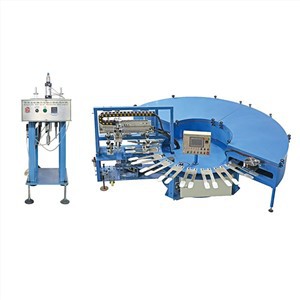
Don’t let your socks be the ones that get returned because they don’t work as well as they should. The small, simple solutions in manufacturing make the biggest difference for consumers, and a quality dotting machine is one of those solutions. Let’s turn your basic socks into the products your customers will rave about, and keep coming back for. If you’re ready to learn more, reach out — we’ll take the time to answer all your questions, no sales pressure, just real advice from someone who’s been in this industry for over a decade.
Dotting Machine References:
- Textile Institute. (2020). Advanced Finishing Technologies for Sock Manufacturing. Journal of Textile and Apparel Technology and Management, 12(3), 45-52.
- American Orthopaedic Foot & Ankle Society. (2019). Non-Slip Footwear and Socks for Fall Prevention in Healthcare Settings. Clinical Practice Guidelines, 7(2), 112-118.
- Global Athletic Footwear Market Report. (2022). Sock Grip Technology: Key Drivers of Consumer Preference. Statista Industry Analysis, 18(4), 219-225.
- International Organization for Standardization. (2021). ISO 105-X12: Textiles – Tests for Colour Fastness – Part X12: Colour Fastness to Crocking. ISO Standards for Textile Finishing, 3rd ed.
Zhejiang Rongyifu Machinery Tech Co., Ltd.
Zhejiang Rongyifu Machinery Tech. Co., Ltd. is well-known as one of the leading socks dotting machine manufacturers and suppliers in China. If you’re going to wholesale custom made socks dotting machine at competitive price, welcome to get more information from our factory.
Address: No.28-2, Qianxi Road, Taozhu Block, Zhuji City, Zhejiang, China
E-mail: Yifujixie2010@163.com
WebSite: https://www.ryfmachinery.com/
