If you’ve ever picked up a gluten-free waffle from a grocery store shelf or waited for one to finish cooking at a café, chances are you’ve encountered xanthan gum somewhere in the ingredient list. As a xanthan gum supplier, I field questions about its role in gluten-free baked goods all the time—most of which boil down to one core question: can xanthan gum actually make a good gluten-free waffle? The short answer is yes, but there’s a lot more nuance to why it works, how to use it, and why it’s non-negotiable for anyone trying to replicate that light, crisp texture of traditional wheat-based waffles without gluten. Let’s break this down, from the science of gluten structure to how I work with food manufacturers and home bakers alike to get results that don’t fall flat. Xanthan Gum
First, let’s start with the basics: what makes a traditional waffle structure so reliable? Wheat flour has two proteins, gliadin and glutenin, that combine when mixed with water to form gluten. This network is like a flexible, stretchy net—when you pour waffle batter into a hot iron, the gluten network sets, trapping air bubbles created by leaveners (baking powder, yeast, or even just whisked egg whites). That’s why a standard waffle comes out crisp on the edges, tender inside, and holds its shape without collapsing. Remove gluten, and that net disappears. Gluten-free flours—rice, almond, oat, coconut, you name it—are made of starch and protein, but they don’t have the unique ability to form that continuous, stretchy network. Gluten-free waffle batter can turn dense, crumbly, or flat: too much starchy flour makes it gummy, too little moisture makes it dry, and without something to hold those air bubbles, the waffle deflates as it cooks.
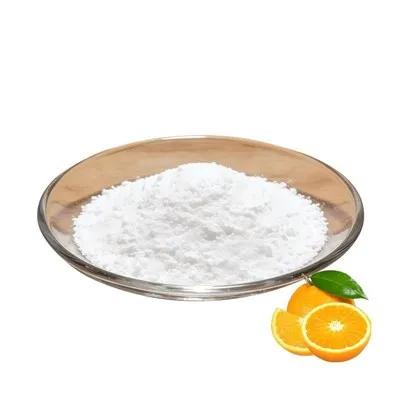
That’s where xanthan gum steps in, and this isn’t just a marketing claim—its function is rooted in polymer chemistry. Xanthan gum is a polysaccharide produced by fermenting Xanthomonas campestris bacteria, a process we’ve refined at my supply facility over decades to ensure consistent purity and performance. When you mix xanthan gum with liquid, it forms a thick, viscous gel that acts as a substitute for gluten’s network. The long, tangled polymer chains of xanthan gum wrap around starch and protein particles in gluten-free flour, creating a flexible, elastic structure that can trap those air bubbles during baking. It also binds the flour particles together, so the waffle doesn’t break apart when you lift it from the waffle iron.
But it’s not one-size-fits-all. I often see bakers add too much xanthan gum, which is just as bad as adding none. Too much of the polymer creates an overly dense, rubbery texture—like biting into a waffle made of gummy candy instead of something light. The right amount depends on a few factors: the type of gluten-free flour blend you’re using, the other ingredients (egg, oil, sweetener), and whether you’re making a batter for a waffle iron that runs hot or cool. For most standard gluten-free waffle blends, the sweet spot is between 0.5 and 1 teaspoon of xanthan gum per cup of gluten-free flour. If a blend is heavy on high-starch flours like tapioca or potato starch, you can go a little higher, up to 1.5 teaspoons, but if it’s made with more nutrient-dense flours like almond or oat, stick to the lower end to avoid that rubbery texture.
Another thing I emphasize to my clients—both large food manufacturers and small home bakeries—is that xanthan gum doesn’t work in isolation. It’s a support ingredient, not a replacement for good batter balance. For example, adding an extra egg or a tablespoon of apple cider vinegar can boost the structure alongside xanthan gum, because eggs add protein that reinforces the polymer network. Oil adds moisture and crispness, which complements the xanthan gum’s binding power; too little oil will lead to dry waffles, even with the right amount of gum. I’ve had a bakery client test a waffle recipe with just rice flour and 1 teaspoon of xanthan gum, and they ended up with crumbly, flat waffles. When we adjusted it to add one egg and 2 tablespoons of melted coconut oil, the structure held, and the texture was exactly what their customers were looking for: crisp edges, a soft interior, no gritty aftertaste.
One of the biggest misconceptions I encounter as a xanthan gum supplier is that xanthan gum is artificial or unsafe for gluten-free diets. Let’s clear that up: xanthan gum is naturally gluten-free, and it’s processed to avoid cross-contamination with wheat during production—something we take very seriously at our facility, with dedicated production lines and testing protocols to ensure our xanthan gum has less than 5 parts per million of gluten, meeting FDA standards for gluten-free labeling. It’s also approved by the FDA, EFSA, and other global food safety authorities, so it’s not a “filler” or a “trick” ingredient—it’s a functional additive that solves a very real problem in gluten-free baking.
I also work with a lot of small-scale gluten-free bakeries that struggle with consistency. A baker might make a great batch of waffles one week, then the next week they come out flat, and they can’t figure out why. More often than not, it’s a mistake in xanthan gum measurement, or the order they add ingredients. Xanthan gum is a fine powder that can clump if you just pour it on top of flour and mix—so it should be whisked into the dry ingredients first, or mixed with a small amount of liquid before adding to the batter. If it clumps, those chunks won’t dissolve, leading to uneven structure: some parts of the waffle will be dense because there’s too much xanthan gum, others will be crumbly because there’s not enough. I provide detailed usage guides to all my clients that break down these small steps, because even a 10-second mixing trick can make the difference between a saleable waffle and one that gets sent back.
What about alternatives, you might ask? There are other binders used in gluten-free baking—guar gum, psyllium husk, methylcellulose—but each has its own downsides when it comes to waffles. Guar gum is cheaper than xanthan gum, but it creates a slimy texture in high-moisture batters, which waffle batter definitely is. Psyllium husk can leave a gritty aftertaste that’s noticeable in a light waffle, and it absorbs a lot of liquid, so you have to adjust the batter amount, which can throw off recipes. Methylcellulose works great for meat analogs, but it gives a chewy, glue-like texture that’s not ideal for waffles. Xanthan gum strikes the best balance: it’s neutral in flavor, works with a wide range of flour blends, and creates that exact texture people expect from a waffle. That’s why 90% of the gluten-free waffle products I supply to food brands use xanthan gum as their primary binder.
I also see home bakers experimenting with low-sugar or keto gluten-free waffles, and xanthan gum works just as well here. For keto recipes, which often use almond flour and coconut flour, the ratio is a little different: 1/4 teaspoon of xanthan gum per 1/2 cup of almond flour, because almond flour is denser. I recently worked with a home baker who wanted to make keto waffles for her family, and she had tried two other binders that left a bad aftertaste. We tested xanthan gum at 1/4 teaspoon, paired with a tablespoon of cream cheese, and her waffles came out with a crisp exterior, soft inside, and no grit. That’s the kind of result that makes the work we do as a xanthan gum supplier worth it.
Another point to consider is shelf life, which is a big deal for commercial gluten-free waffles that are sold frozen or on grocery store shelves. Xanthan gum helps maintain the structure of the waffle after freezing and reheating. Without it, gluten-free waffles often get soggy when reheated in a toaster or microwave, because the starch breaks down and releases moisture. Xanthan gum’s polymer network holds that moisture in, so the waffle stays crisp even after being frozen and reheated. I’ve had multiple snack food clients tell us that switching to our grade of xanthan gum increased their frozen waffle’s shelf life by 2 weeks, which was a huge win for their bottom line and for customers who want a consistent product.
Of course, there are exceptions. If someone is making a gluten-free waffle with a very low-moisture batter, like a batter made with mostly almond flour and no added liquid, xanthan gum might not be necessary, but that’s a rare case. Most waffle batters—whether homemade or commercial—need that binding agent to avoid collapse. Even yeast-based gluten-free waffles, which are meant to be light and fluffy, use xanthan gum to keep the air bubbles from escaping during fermentation and baking. I once had a craft bakery client that tried a yeast waffle recipe without xanthan gum, and half their batch came out flat because the bubbles popped during the proofing stage. Adding the right amount of xanthan gum fixed the issue entirely.
At the end of the day, the question isn’t “can xanthan gum be used in gluten-free waffles”—it’s “how can we use it to make the best possible gluten-free waffles?” That’s where my role as a xanthan gum supplier comes in: it’s not just about selling a powder, it’s about providing the right grade, the right guidance, and the right support to help bakers and food manufacturers get consistent, high-quality results. If you’re a home baker looking to perfect your gluten-free waffle recipe, or a brand that wants to launch a new gluten-free waffle line, I’m here to help. Reach out to discuss your specific needs, whether that’s customized xanthan gum blends, usage recommendations, or quality testing for your products.
Soybean Fiber References
- National Academies of Sciences, Engineering, and Medicine. (2021). Safety Assessment of Xanthan Gum as a Food Additive. In Dietary Reference Intakes for Food Additives and Components.
- Codex Alimentarius Commission. (2019). General Standard for Food Additives (GSFA): Xanthan Gum.
- Golubowska, M., et al. (2018). Functional Properties of Xanthan Gum in Gluten-Free Baked Goods. Journal of Food Science and Technology, 55(10), 3987-3995.
- FDA. (2022). Food Additive Status List: Xanthan Gum.
- Taylor, J. P., et al. (2020). Texture Development in Gluten-Free Waffle Batters: The Role of Hydrocolloids. Cereal Chemistry, 97(3), 512-521.
Fudijia (Tianjin) Supply Chain Co., Ltd.
With abundant experience, we re one of the most professional xanthan gum manufacturers and suppliers in China. We warmly welcome you to wholesale bulk high quality xanthan gum made in China here from our factory. For more information, contact us now.
Address: 301-2-1C,Jin Bin Jie Zuo,No.98, Huanghai Road,TEDA, Tianjin, China
E-mail: foodchem@hjlfoods.com
WebSite: https://www.ifoodchem.com/
