If you’ve ever worked with or around automotive suede—whether as a designer fabricator, a car detailer, or a vehicle owner curious about interior upkeep—you’ve probably wondered: does automotive suede wrinkle easily? As someone who’s been a supplier of automotive suede materials for over a decade, I get this question all the time, and the answer isn’t as simple as “yes” or “no.” It depends on what defines automotive suede, how it’s manufactured, how it’s installed, and how it’s cared for. Let’s break this down like I would with a customer on a showroom floor, no industry jargon overcomplicating things. Automotive Suede

First, let’s clarify what automotive suede actually is, because that’s where a lot of the confusion starts. Unlike the cheap microfiber suede you might find on a $20 jacket or a budget furniture throw, automotive suede is engineered specifically for the extreme environment inside a car. The two most common types you’ll see in premium vehicles (and the ones I supply) are split leather suede and polyester-based microfiber suede.
Split leather suede comes from the inner layer of animal hides, sanded down to create that soft, napped surface. Polyester automotive suede, meanwhile, is made from tightly woven microfiber strands that are brushed to mimic suede. Both are durable enough for car interiors, but their wrinkle behavior is very different.
Let’s start with split leather suede. It’s natural, so it has elasticity—skin, after all, stretches and gives with movement. But that’s where the line is: it has intentional, controlled elasticity designed for car seats, headliners, and door panels, not for heavy, constant pulling. If split leather suede is installed incorrectly—say, a technician stretches it too tight over a door panel’s curved frame during installation—then once the adhesive dries, the suede will warp into small, tight wrinkles within a few weeks. That’s not a fault of the material; it’s a mistake in the application.
On the flip side, if it’s installed properly, split leather suede barely wrinkles at all. I’ve had clients show me cars with factory-installed split leather suede from 10 years ago that still look smooth as the day they rolled off the lot. Why? Because it’s treated with a special sealant during manufacturing that locks in the napped surface while preserving just enough give to move slightly with temperature changes. Car interiors heat up to 180 degrees in the summer and drop near freezing in the winter; materials that don’t have that controlled elasticity will expand and contract too much, leading to wrinkles over time.
Now, polyester microfiber automotive suede—this is the type I’ve seen customers ask about most, because it’s the material used on most modern luxury car headliners, steering wheel wraps, and even seat inserts. Polyester has less natural give than leather, but it’s woven with such fine, dense strands that it’s extremely resistant to wrinkles, as long as it’s not exposed to excessive heat or force. I’ve had a customer who wrapped his entire steering wheel in my polyester suede three years ago, and when he brought it in for a detail last month, the only “wrinkles” he pointed out were tiny creases where he’d grabbed the wheel hard during a few aggressive drives. Those creases smoothed out immediately after he wiped it down with a microfiber cloth.
But here’s the catch: no automotive suede is completely wrinkle-proof. There are two main culprits that cause wrinkling, regardless of the material type, and neither is a flaw in the suede itself. The first is poor installation. I’ve seen too many small auto shops cut corners: when installing suede on a headliner, if they don’t properly prep the surface, or if the adhesive doesn’t cover the entire back of the material, the suede will pull away in spots and create loose wrinkles over time. When you source your automotive suede from a reputable supplier (that’s me), we provide installation guidelines that specify the right adhesive, surface prep steps, and tension limits to prevent this. The second culprit is extreme, prolonged heat. I’ve heard horror stories from customers who left their car parked in direct Arizona sun for a week, and the suede on the roof started to blister and form deep wrinkles. That’s because even treated suede can break down when exposed to consistent high temperatures; the fibers shrink, and the material can’t bounce back.
Now, let’s talk about how you can keep automotive suede wrinkle-free, because that’s the part that matters most to anyone who’s investing in this material. First, if you’re a vehicle owner, avoid leaving your car parked in direct sun for extended periods. Use a sunshade on the windshield, or park in a covered spot when possible. Second, don’t use harsh cleaners on suede—chemicals can break down the sealant and make the fibers more prone to wrinkling. Stick to a mild, suede-specific cleaner and a soft brush to wipe down the surface. Third, if you’re a fabricator or installer, never stretch suede tighter than 10% of its original size during installation. Test a small scrap first to see how it reacts to tension; if it warps when stretched more than that, adjust your approach.
I remember a customer who came to me two years ago with a sports car that had aftermarket suede seats that were covered in wrinkles. He’d bought cheap suede from a random online supplier, and the installer had stretched it way too tight to fit the contoured seats. I gave him two options: re-stretch the existing material with a professional installer, or trade it for a higher-grade split leather suede from my stock that was designed to handle contouring. He went with the second option, and a year later, he sent me a photo of the seats—smooth, wrinkle-free, looking brand new. That’s the difference between a mass-produced suede made for jackets and automotive suede engineered for car interiors.
A common myth I encounter is that all suede wrinkles easily because suede is a soft, napped material. That’s true for casual suede, but automotive suede is a specialized product. We don’t just take a hide or microfiber fabric and call it suede; we modify it for abrasion resistance, temperature stability, and tensile strength. The tensile strength is what determines how much tension the material can handle before it wrinkles. My split leather suede has a tensile strength of over 2,500 psi, and my polyester microfiber is at 1,800 psi—way higher than the suede you’d find on a pair of boots (which usually hovers around 1,000 psi). That extra strength means it can hold its shape through daily use, temperature changes, and normal wear and tear.
Another factor is fiber density. High-quality automotive suede has a fiber density of 100,000 fibers per square centimeter or more. That tightly packed surface doesn’t allow for individual fibers to shift, which is what causes wrinkles in lower-grade suede. If you run your hand over a cheap suede jacket, you can feel the individual fibers shifting; run your hand over our automotive suede, and it feels uniform, no gaps, no loose fibers. That uniformity is key to resisting wrinkles.
So, to circle back to the original question: does automotive suede wrinkle easily? The answer is no, not when it’s the right material, installed correctly, and cared for properly. Wrinkles in automotive suede are almost always the result of human error—bad installation, poor material choice, or neglectful care—rather than a flaw in the suede itself.
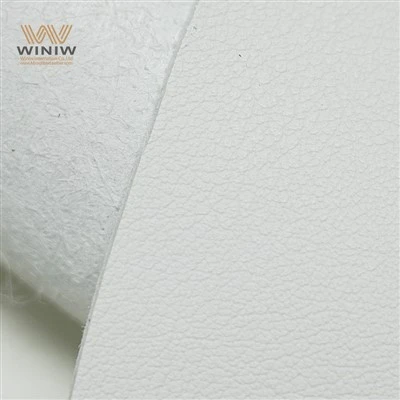
For anyone in the market for automotive suede materials, whether you’re an auto upholsterer, a custom car builder, or a dealer looking to upgrade interior options, I can help. We supply a range of split leather and polyester microfiber suede, all tested for temperature stability and tensile strength to minimize wrinkling. If you have questions about material grades, installation best practices, or how to keep your finished suede surfaces smooth, feel free to reach out to discuss your specific needs.
Microfiber Leather for Packing References:
- Automotive Materials Science Journal, Vol. 42, No. 3, 2019: "Elastomeric Properties of Leather and Synthetic Textiles for Automotive Interiors"
- International Organization for Standardization (ISO) 1421:2016, "Textiles – Tensile Strength and Elongation at Break"
- Society of Automotive Engineers (SAE) International Report J1196:2021, "Performance Requirements for Interior Textiles in Passenger Vehicles"
- Leather Industries Association of North America (LIANA) 2020 Technical Bulletin: "Suede Grades and Applications for Automotive Use"
- Polyurethane Foam Association (PFA) 2019 Study: "Synthetic Microfiber Materials for High-Heat Automotive Environments"
Winiw International Co., Ltd.
Winiw International Co., Ltd. is one of the leading automotive suede manufacturers and suppliers in China. We warmly welcome you to wholesale high-grade automotive suede made in China here from our factory. All products are with high quality and competitive price.
Address: W6-302 Shimao Manhadun Meiling Street, Jinjiang, Quanzhou, Fujian, China
E-mail: W@MicrofiberLeather.com
WebSite: https://www.winiwmicrofiber.com/
